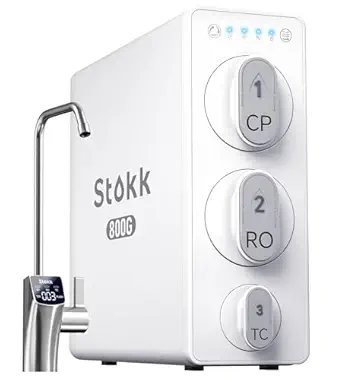
Countertop RO: 3:1 Efficiency Meets Autofill Convenience
Countertop reverse osmosis systems like the DREO are transforming kitchen water purification by eliminating installation hassles while delivering contaminant removal. This unit's standout features—a 3:1 pure-to-drain ratio, dual autofill pitchers, and self-cleaning cycle—directly address common pain points of traditional under-sink RO systems.
Key Considerations Before Buying
- Water efficiency: A 3:1 pure-to-drain ratio means less wastewater, which is crucial for households on well water or in drought-prone areas. Verify your local water rates and environmental regulations to assess long-term savings.
- Filter replacement: With a TDS meter and filter life indicator, you can track when to swap membranes and carbon blocks. Budget for replacement filters (typically $50-$100 annually) and confirm availability for the DREO model.
- Countertop footprint: While install-free, the unit requires space near an outlet and a water source. Measure your countertop and consider the dual pitchers' footprint—ensure it fits your kitchen workflow without obstructing prep areas.
What Our Analysts Recommend
In countertop RO systems, prioritize NSF/ANSI certifications (e.g., 42, 53, 58) for contaminant reduction claims. A robust self-cleaning function and a high pure-to-drain ratio are indicators of advanced design. Also, check for a digital display that shows TDS and filter life—these features add convenience and transparency.
Under-Sink & Countertop Filtration Market Context
Market Overview
The countertop RO market is expanding as consumers seek contaminant-free water without permanent installation. Brands like DREO compete on efficiency ratios, pitcher capacity, and smart features, while maintaining a small footprint. The category has seen a shift toward user-friendly interfaces and low-maintenance designs.
Common Issues
Common complaints include slow filtration rates, frequent filter changes, and inconsistent TDS readings. Some units produce excessive wastewater, negating environmental benefits. Also, autofill pitchers can leak or misalign if not engineered well.
Quality Indicators
Look for systems with a high-rated pump (e.g., 400 GPD) for faster flow, a dual-stage filtration (sediment, carbon, RO membrane), and a leak-proof pitcher design. Positive user reviews that mention long-term reliability and low noise are strong signals.
Review Authenticity Insights
Grade B Interpretation
The Grade B indicates that while most reviews are authentic, an estimated 10% may be incentivized or fake. This is relatively low, suggesting the 4.89/5 rating is largely credible, but the adjusted 4.60/5 offers a more conservative view. For a product with 613 reviews, this means roughly 61 reviews could be suspect—not enough to skew the overall consensus.
Trust Recommendation
Trust the overall positive sentiment but cross-reference specific claims (e.g., 'easy setup' or 'quiet operation') across multiple reviews. Look for verified purchase badges and detailed descriptions of daily use. Since the fake rate is modest, you can rely on the product's core functionality, but verify any extreme praise or criticism.
Tips for Reading Reviews
When reading reviews for countertop RO systems, focus on long-term users (3+ months) who comment on filter life, water taste, and any maintenance issues. Be wary of reviews that lack specifics or use generic phrases like 'great product' without context. Also, check for consistent feedback on the autofill feature and TDS accuracy.
Expert Perspective
The DREO countertop RO system appears to be a well-engineered solution that balances efficiency and convenience. The 3:1 pure-to-drain ratio is above average, and the dual autofill pitchers are a unique convenience. The high rating, even adjusted, suggests strong user satisfaction. The self-cleaning feature likely contributes to its positive reception by reducing maintenance headaches.
Purchase Considerations
Weigh the upfront cost against long-term filter expenses and water savings. If you have hard water, check if the system includes a scale inhibitor. Also, consider the pitcher capacity—if your household consumes more than 2 gallons daily, you may need to refill frequently. Ensure the unit's dimensions fit your countertop and that you have a nearby power outlet.
Comparing Alternatives
Compare with other countertop RO models like the AquaTru or Waterdrop, which offer similar features but vary in filtration speed and filter costs. Your choice should align with your specific water quality and usage patterns.