
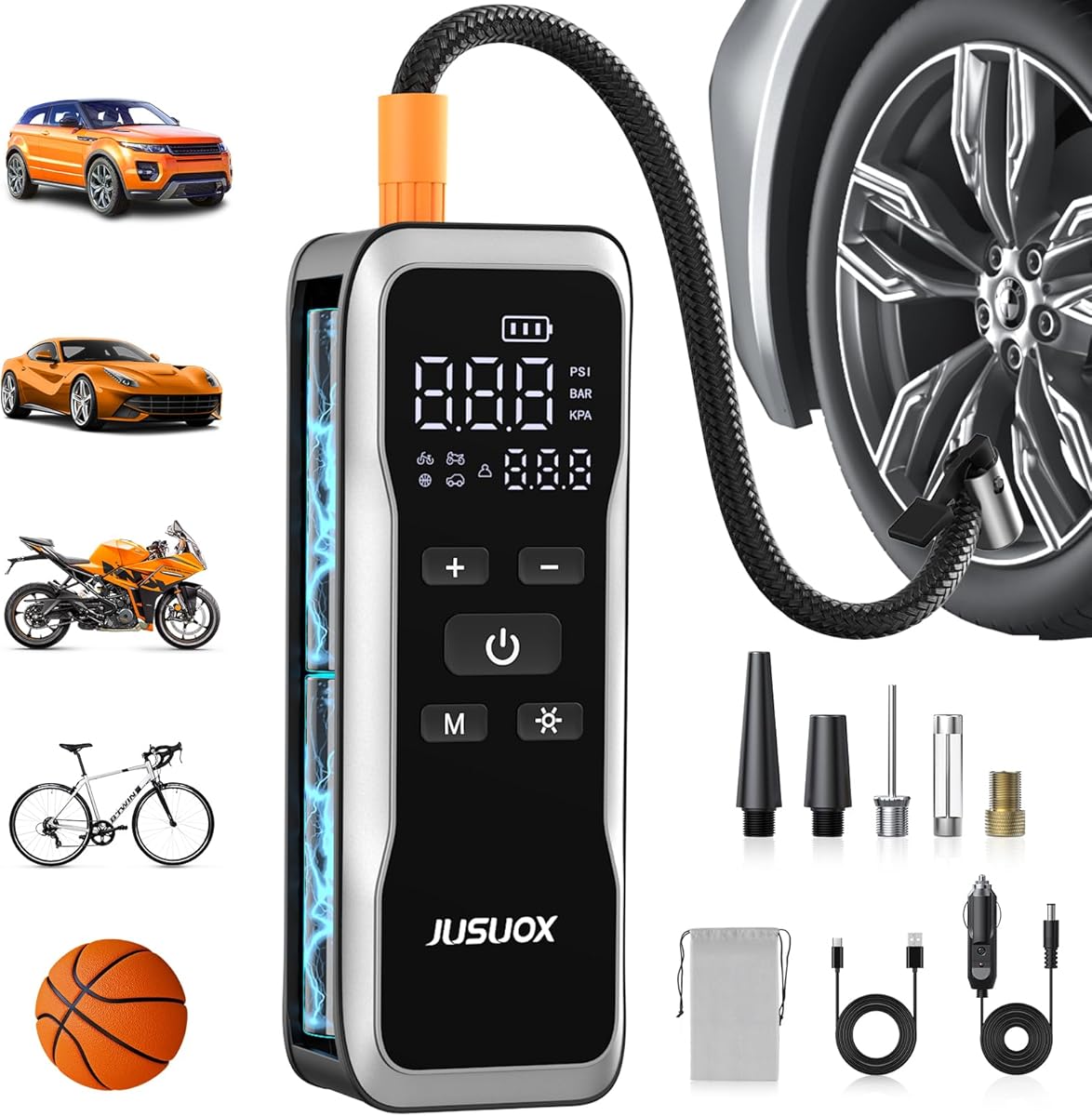
Dual-Power Tire Inflators: Balancing Cordless Convenience with 12V Reliability
For this specific dual-power inflator with a 150PSI capacity and large battery, buyers should understand the trade-offs between cordless freedom and 12V power. The combination allows for emergency use anywhere but requires managing battery life versus the unlimited runtime of a vehicle connection. This particular model's digital gauge and LED light add utility beyond basic inflation.
Key Considerations Before Buying
- The 150PSI maximum pressure is suitable for passenger cars and motorcycles but verify it meets requirements for larger truck tires or high-pressure sports equipment.
- Dual-power functionality means evaluating both the battery's real-world capacity (for cordless use) and the 12V cable's length and build quality for in-vehicle use.
- Digital gauges on portable units like this must maintain accuracy over time and in varying temperatures—look for consistent calibration in reviews.
What Our Analysts Recommend
Quality indicators include a robust air hose connection that resists leaks at high pressure and a cooling system that prevents motor overheating during extended use. For dual-power models specifically, check how seamlessly the unit switches between power sources and whether the battery charges efficiently from the 12V outlet.
Air Compressors & Inflators Market Context
Market Overview
The portable tire inflator market has shifted toward lithium-ion battery-powered units, with dual-power models like this one becoming the standard for balancing convenience and reliability. Consumers now expect fast inflation times (under 5 minutes for a car tire from flat) alongside digital precision.
Common Issues
Common problems include inaccurate digital gauges that drift over time, battery degradation reducing cordless performance after 12-18 months, and plastic hose fittings that crack under repeated stress. Motor burnout from continuous use beyond recommended duty cycles remains a frequent failure point.
Quality Indicators
Look for metal braided air hoses instead of all-plastic, thermal overload protection in the motor circuitry, and batteries with identified cell chemistry (like Li-ion). Higher-quality units specify duty cycles (e.g., 15 minutes on, 15 minutes off) rather than claiming unlimited runtime.
Review Authenticity Insights
Grade B Interpretation
A Grade B with 10% estimated fake reviews indicates generally trustworthy feedback with minor manipulation concerns. For this inflator, the 4.60 adjusted rating (down from 4.89) suggests authentic satisfaction is still very high, but some reviews may exaggerate performance.
Trust Recommendation
Focus on reviews discussing specific use cases like inflating motorcycle tires to 40PSI or reviving a completely flat car tire—these provide verifiable performance data. Be skeptical of reviews claiming implausibly fast inflation times without mentioning starting PSI.
Tips for Reading Reviews
Prioritize reviews mentioning long-term ownership (6+ months) to assess battery durability and gauge accuracy over time. Look for photos showing the unit in actual use, and pay attention to comments about the emergency LED light's real-world brightness during nighttime repairs.
Expert Perspective
This inflator's exceptionally high authentic rating (4.60/5) suggests it delivers on core promises: reliable dual-power operation and sufficient pressure for most vehicles. The large capacity battery specifically addresses a common complaint in the category—short cordless runtime. The 150PSI maximum, while not for heavy-duty trucks, covers 95% of passenger vehicles and powersports equipment. The digital gauge represents a meaningful upgrade over analog dials for precision inflation.
Purchase Considerations
Weigh whether you truly need cordless capability or if a 12V-only model would suffice at lower cost. Consider your typical use case: frequent top-offs favor cordless convenience, while emergency flat repairs may benefit more from the reliability of vehicle power. The LED light adds genuine value for roadside nighttime use.
Comparing Alternatives
Compare inflation speed claims against similar 20V-class cordless models and examine warranty terms for battery coverage specifically.


