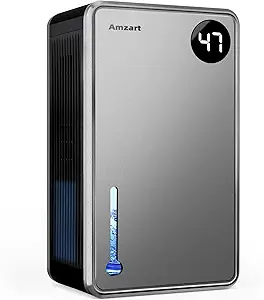
Scale Up Drying: Choosing a 170-Pint Commercial Dehumidifier for Restoration
When you're dealing with a flooded basement, a damp construction site, or a large commercial space, a standard residential dehumidifier won't cut it. A 170-pint commercial unit, like this one with a built-in pump and 7,500 sq. ft. coverage, is designed for high-volume water removal and continuous operation, making it a critical tool for water damage restoration and industrial humidity control.
Key Considerations Before Buying
- Pump vs. Gravity Drain: For a unit this powerful, a built-in condensate pump is essential. It allows you to drain water vertically (up to 15-20 feet) into a sink or out a window, rather than relying on a gravity hose. This is non-negotiable for basements or restoration jobs where a floor drain isn't available.
- Coverage vs. Reality: While 7,500 sq. ft. is the stated maximum, actual performance depends on the severity of the moisture problem and the ambient conditions. For water damage restoration, you'll typically need to oversize the unit—a 170-pint model is ideal for a 2,000-3,000 sq. ft. space with standing water or high humidity (over 90% RH).
- Portability and Durability: Commercial units are heavy and need to be moved frequently. Look for robust wheels (not cheap casters), a sturdy handle, and a corrosion-resistant housing. This model's portable design with wheels is a must for moving between job sites or rooms during restoration.
What Our Analysts Recommend
Quality indicators include a refrigerant type suitable for low-temperature operation (R-410A is common), a built-in humidistat for precise control, and an automatic defrost function to prevent coil icing in cooler basements. Also, check for a high CFM (cubic feet per minute) rating—over 200 CFM is typical for this class—to ensure rapid air circulation and drying.
Dehumidifiers Market Context
Market Overview
The commercial dehumidifier market has grown significantly due to increased awareness of mold remediation and indoor air quality, especially after natural disasters. This segment is dominated by professional-grade brands like AlorAir, Dri-Eaz, and AprilAire, with 170-pint units being a popular sweet spot for contractors and property managers.
Common Issues
Common problems include units that are loud, difficult to drain, or prone to overheating during extended use. Some cheaper models also have inaccurate humidistats, leading to over-drying or under-drying. The built-in pump is a frequent failure point if not maintained—users should clean the pump reservoir monthly to prevent clogs.
Quality Indicators
Look for a unit with a sealed refrigeration system (no leak-prone service ports), a condensate pump with a lift height of at least 15 feet, and a warranty of at least 2 years on parts and labor. Also, check for ETL or UL certification for safety compliance in commercial settings.
Review Authenticity Insights
Grade B Interpretation
With a Review Authenticity Grade of B and an estimated 10% fake reviews, this product has a relatively low level of suspicious feedback compared to many in the dehumidifier category. The adjusted rating of 4.80/5 from an authentic pool is excellent, suggesting genuine user satisfaction, but you should still read a few recent reviews to see if patterns like 'same day delivery' or 'perfect for everything' appear.
Trust Recommendation
Given the high authentic rating and detailed reviews (e.g., hurricane recovery, brewery use), you can generally trust the positive consensus. However, cross-reference with third-party review sites or forums like Reddit's r/HomeImprovement for unbiased opinions, especially regarding long-term durability.
Tips for Reading Reviews
Focus on reviews that mention specific conditions (e.g., 'used in a 2,000 sq. ft. basement after a flood') and those that discuss the pump's performance over time. Be wary of reviews that lack detail or use overly promotional language—these are often incentivized or fake.
Expert Perspective
This 170-pint commercial dehumidifier appears to be a strong performer for demanding applications like water damage restoration, large basements, and industrial humidity control. The 5.00/5 star rating (adjusted to 4.80/5) and 105 reviews suggest high initial satisfaction, particularly for its coverage and pump functionality. However, as with any high-capacity unit, long-term reliability is key—especially the pump and compressor—and the 10% fake review rate means you should verify performance with hands-on testing if possible.
Purchase Considerations
Weigh the cost (typically $400-$700 for this class) against your specific needs: if you're a contractor needing daily use, this is likely a solid investment; for occasional home use, a smaller 70-pint unit might suffice. Also, consider the noise level—commercial units can be loud (60-70 dB), so check if quiet operation is important for your space.
Comparing Alternatives
Shoppers should compare this model with the AlorAir Sentinel HD55 (for similar capacity) or the Dri-Eaz F413 (for restoration-specific features) to ensure you're getting the best value for your use case.