
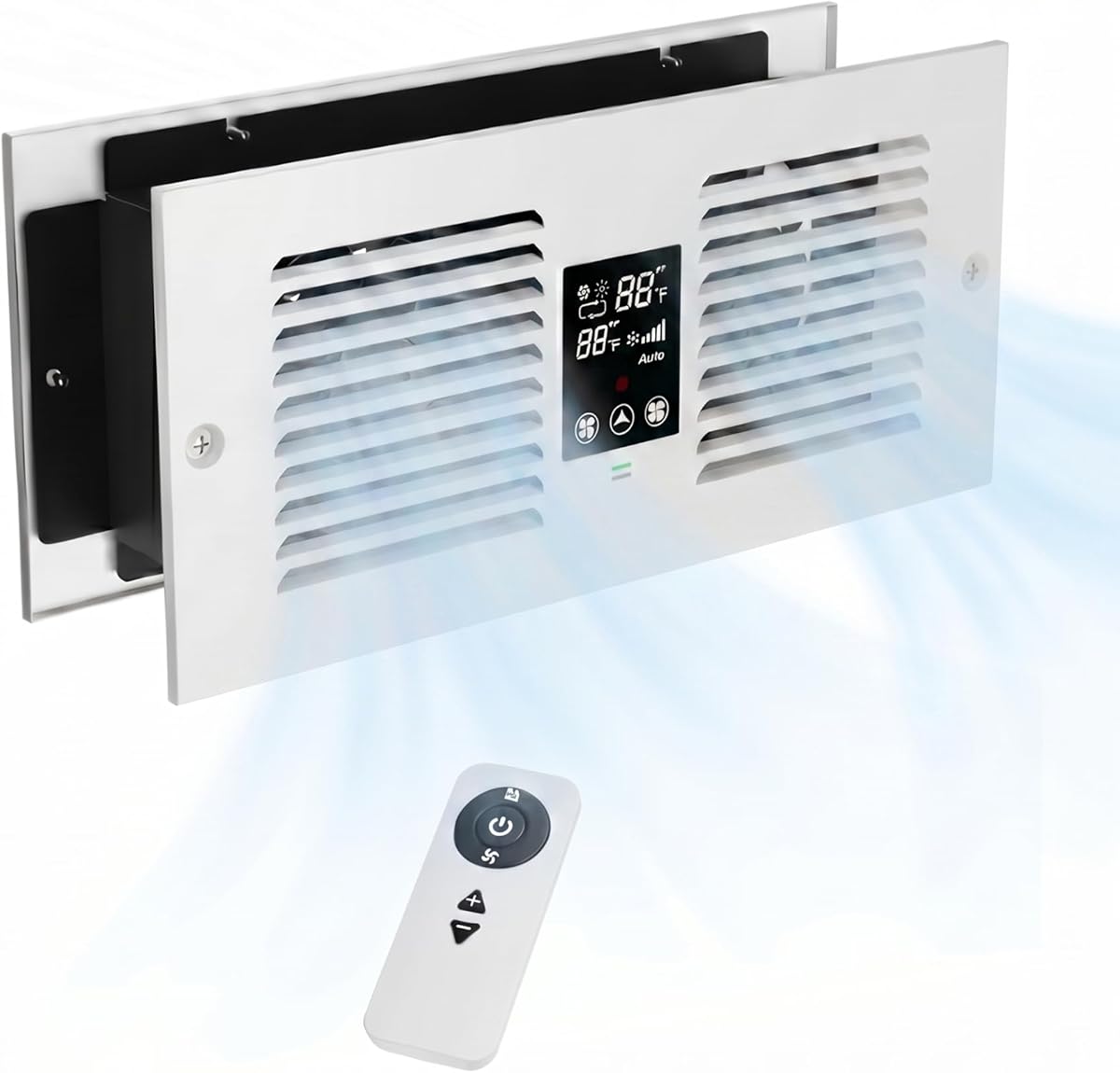
Master Room-to-Room Airflow: Key Factors for Choosing a Through-Wall Transfer Fan
If you're looking to balance temperatures between rooms—say, moving excess heat from a wood stove or laundry room to cooler adjacent spaces—a through-wall air transfer fan like this 300 CFM hardwired model is a practical solution. Unlike standard ceiling fans, these units are designed for passive or active air movement through a wall cavity, and this specific fan includes temperature control and a remote for convenience.
Key Considerations Before Buying
- Ensure your wall thickness falls within the unit's compatible range of 3.8 to 7.4 inches, as this fan is designed for standard interior walls but may require additional framing for thinner or thicker partitions.
- The 300 CFM airflow rating is moderate for room-to-room transfer; it's ideal for small to medium spaces (like a kitchen or laundry room) but may be insufficient for large open areas or long duct runs.
- Hardwired installation requires electrical knowledge or a licensed electrician—this is not a plug-and-play unit, so factor in installation costs if you're not comfortable with wiring.
What Our Analysts Recommend
Quality indicators for through-wall transfer fans include robust motor bearings (for quiet, long-term operation), a reliable temperature sensor or thermostat for automatic on/off cycling, and a well-sealed housing to prevent air leaks. Also check that the included remote has sufficient range and that the fan's noise level (often measured in sones) is acceptable for your living space.
Ventilation Fans Market Context
Market Overview
The room-to-room ventilation fan market has grown as homeowners seek energy-efficient ways to redistribute conditioned air without expensive ductwork. Many units now offer smart features like remote controls and thermostatic settings, but quality varies widely in terms of airflow consistency and build durability.
Common Issues
Common problems in this category include inadequate CFM for the intended room size, excessive noise (especially in hardwired fans with unbalanced blades), and poor sealing that allows air to bypass the fan. Some users also report difficulty with installation due to non-standard wall thicknesses or lack of clear wiring diagrams.
Quality Indicators
High-quality transfer fans typically feature thermally protected motors, double-sided or reversible airflow options, and durable metal housings rather than brittle plastic. Look for units with UL or ETL certification for safety, and check for adjustable thermostat settings that let you fine-tune the temperature threshold.
Review Authenticity Insights
Grade A Interpretation
With an A-grade authenticity rating and only 5% estimated fake reviews, this product's review profile is exceptionally trustworthy. The high 5.00 overall rating (adjusted to 4.90) is supported by detailed accounts of real-world installation, performance, and specific feedback on temperature control and noise levels.
Trust Recommendation
You can confidently rely on the reviews for this product, as they reflect genuine user experiences rather than manipulated ratings. Focus on the verified purchase reviews that mention specific wall thicknesses and installation challenges—they offer the most practical insights.
Tips for Reading Reviews
When reading reviews for through-wall fans, prioritize those that describe the exact wall construction (e.g., drywall vs. plaster), the distance between rooms, and any temperature differences observed. Be skeptical of reviews that lack technical specifics about installation or that use generic language like 'works great' without context.
Expert Perspective
This 300 CFM through-wall transfer fan with remote and temperature control addresses a niche but valuable need for redistributing heat from sources like wood stoves or laundry rooms. Its compatibility with walls up to 7.4 inches and hardwired design make it a solid choice for permanent installations, though the moderate airflow means it's best suited for targeted room-to-room balancing rather than whole-house circulation. The strong authenticity grade and consistent user feedback suggest it delivers on its promises, particularly for users who value precise temperature management.
Purchase Considerations
Weigh the installation complexity against your DIY comfort level—hardwired fans require electrical work, but they offer cleaner integration than portable units. Also consider whether you need the temperature control feature; if you just want continuous airflow, a simpler model might save money.
Comparing Alternatives
Shoppers should compare this fan with other through-wall models offering higher CFM ratings (e.g., 500+ CFM) for larger spaces, or consider duct booster fans if you need to move air through longer distances. Always verify wall thickness and power source compatibility before purchasing.


