
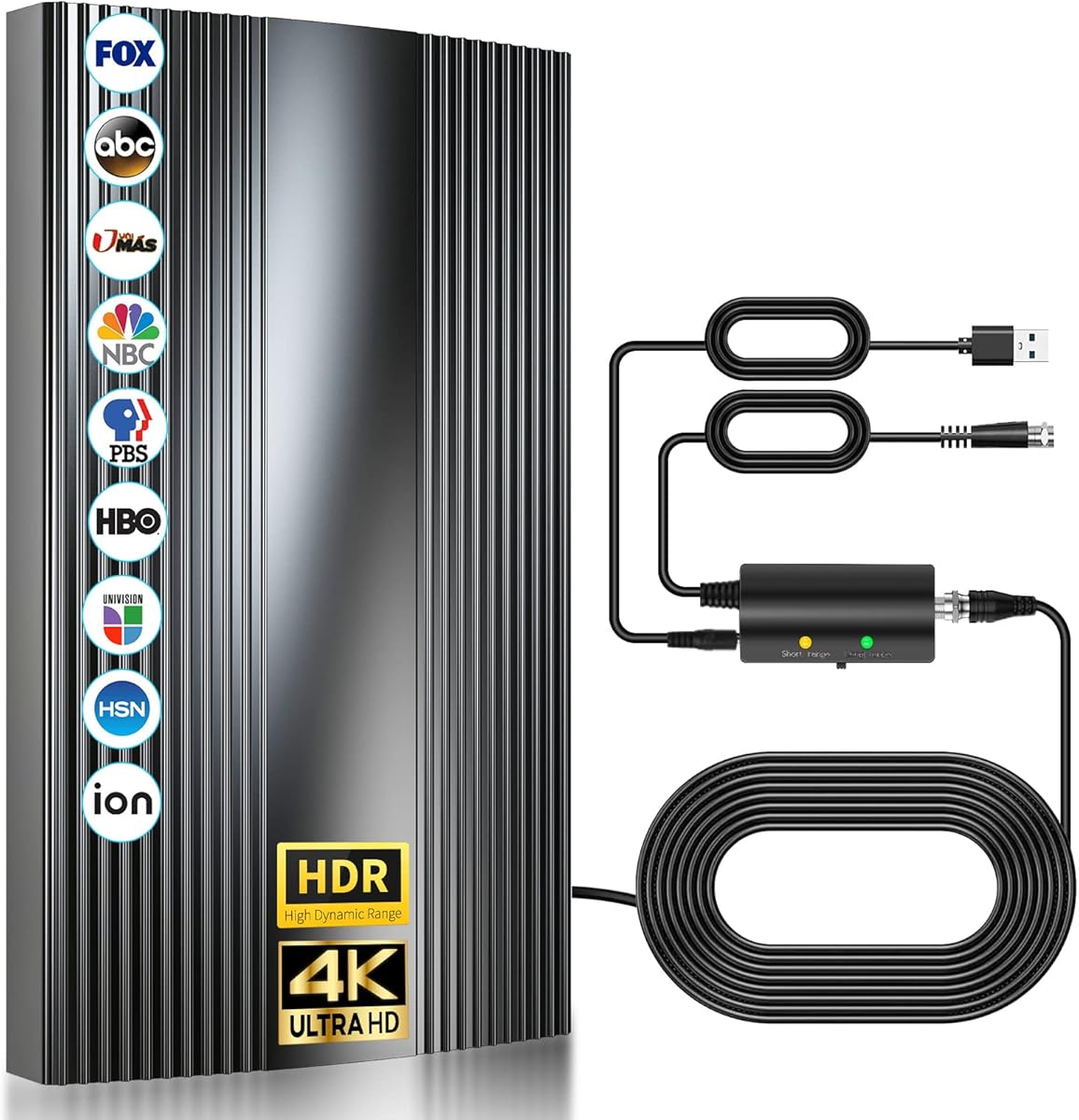
Navigating Indoor TV Antenna Claims: What 3600+ Mile Range Really Means
When evaluating this 2026 Upgraded TV Antenna with its bold 3600+ mile range claim, buyers should understand that advertised range is theoretical maximum under ideal conditions. This specific model includes an amplifier signal booster and unusually long 38ft coax cable, which suggests it's designed for challenging reception scenarios where signal strength is weak.
Key Considerations Before Buying
- The '3600+ mile' claim is marketing hyperbole—actual reception depends on your distance from broadcast towers, terrain, building materials, and local interference, not theoretical maximums.
- The included amplifier can boost weak signals but may also amplify noise and interference in strong signal areas, potentially degrading picture quality rather than improving it.
- The 38ft cable provides placement flexibility but introduces signal loss; longer cables require better shielding and connectors to maintain signal integrity to your TV.
What Our Analysts Recommend
Quality indoor antennas feature durable construction with moisture-resistant components for the advertised indoor/outdoor use. Genuine performance reviews should mention specific channel counts received in particular locations, not just vague claims about 'crystal clear' reception. The amplifier should have a removable power supply to avoid over-amplification in strong signal areas.
TV Antennas Market Context
Market Overview
The indoor TV antenna market is saturated with exaggerated range claims, with many products advertising impossible 1000+ mile ranges despite the fact that most broadcast signals travel 50-70 miles maximum. The '2026 Upgraded' branding follows a trend of future-dated products suggesting technological advancement where little exists.
Common Issues
Consumers frequently report that amplifiers introduce more noise than benefit, and that flat panel designs like this one often have directional limitations despite omnidirectional claims. Many antennas fail to deliver consistent UHF and VHF reception simultaneously, despite advertising both capabilities.
Quality Indicators
Look for antennas with FCC certification, detailed technical specifications about gain (measured in dBi), and frequency range coverage. Quality products provide realistic coverage maps rather than blanket 'miles' claims and include proper mounting hardware for both indoor and outdoor installation as advertised.
Review Authenticity Insights
Grade C Interpretation
The Grade C authenticity rating with 33% estimated fake reviews indicates significant review manipulation. While all reviews show as verified purchases, the discrepancy between the perfect 5.0 rating and adjusted 4.2 rating suggests coordinated positive reviewing.
Trust Recommendation
Focus on the 60% of reviews likely to be genuine—look for those mentioning specific installation challenges, channel scan results with numbers, and comparisons to previous antennas. Be skeptical of reviews that parrot marketing terms like '3600+ miles' without explaining their actual reception experience.
Tips for Reading Reviews
Prioritize reviews that discuss actual channel counts received, specific broadcast towers in their area, and performance during different weather conditions. Authentic reviews often mention amplifier effectiveness (or lack thereof) and cable quality—key differentiators for this specific product.
Expert Perspective
This antenna's combination of amplifier, long cable, and dual indoor/outdoor design suggests it targets users in fringe reception areas, but the exaggerated range claims undermine credibility. The adjusted 4.2 rating from likely genuine reviews indicates decent but not exceptional performance. The '8K 4k 1080p' labeling is misleading—all digital antennas transmit the same signal; picture quality depends on broadcast source and TV capability, not the antenna.
Purchase Considerations
Consider this antenna if you need placement flexibility with the 38ft cable and have confirmed weak signal issues that might benefit from amplification. Check your actual distance from broadcast towers using the FCC DTV Reception Maps—if you're within 35 miles of towers, you likely don't need the amplifier feature that's central to this product's design.
Comparing Alternatives
Compare this model's actual specifications—particularly amplifier gain and frequency range—against antennas from established brands like Winegard or Antennas Direct that provide realistic coverage estimates.


