
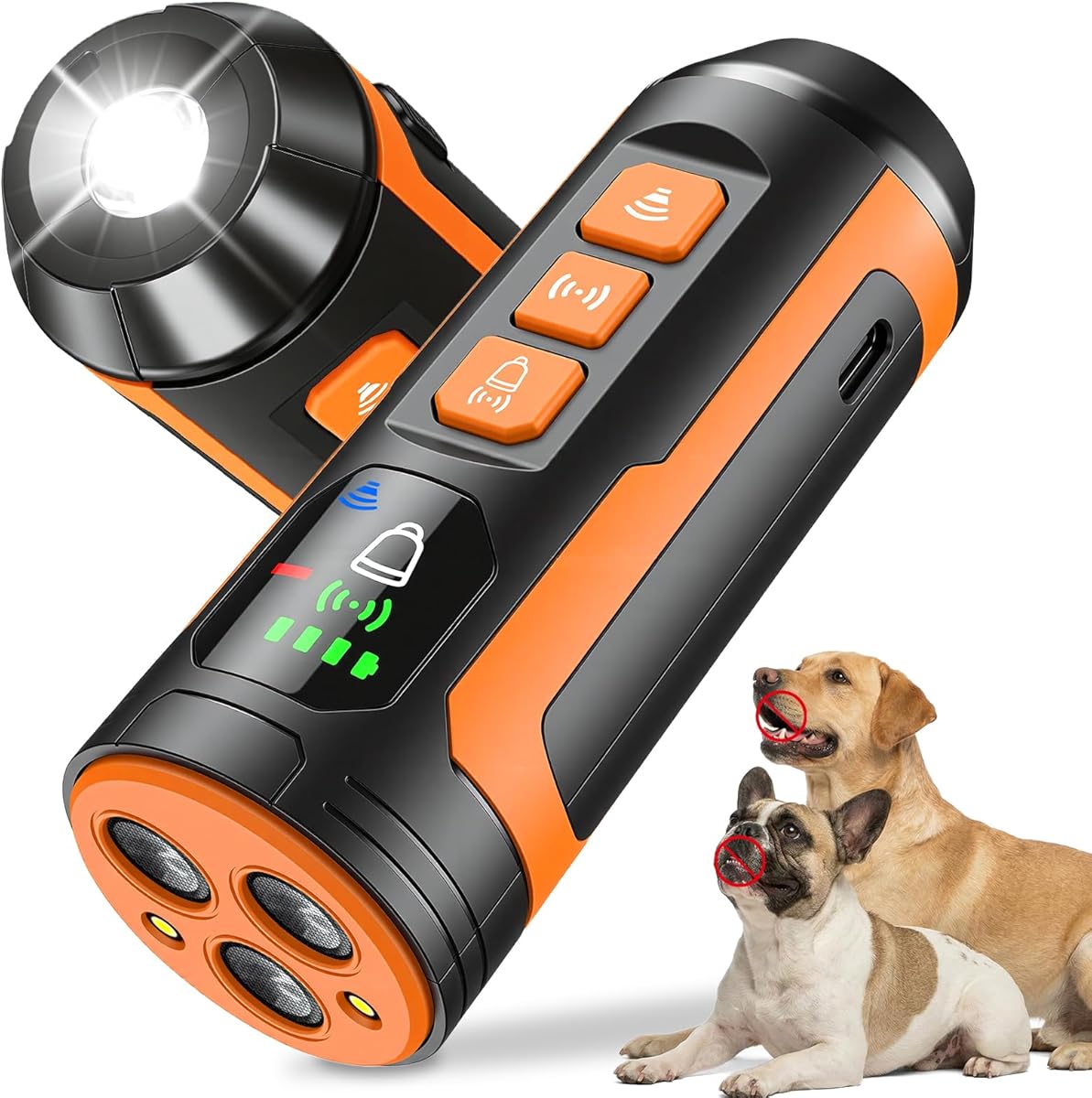
Choosing a Bark Deterrent: Range, Response Time, and Rechargeability Matter
When evaluating this specific 50-foot range deterrent with 3X-fast response, focus on how its ultrasonic technology interacts with your dog's specific barking triggers. The inclusion of an LCD screen and Type-C charging represents current-generation features that distinguish it from older models using disposable batteries or basic LEDs. Consider whether the portable form factor aligns with your training scenarios—indoor use versus backyard correction.
Key Considerations Before Buying
- The advertised 3X-fast anti-barking claim refers to the device's processing speed to emit an ultrasonic tone upon detecting bark frequencies; test this against your dog's reaction time for effectiveness.
- A 50-foot effective range is suitable for medium yards but may be insufficient for large properties or if your dog barks from a distance beyond this threshold.
- The integrated LED flashlight adds multi-functionality but isn't a core training feature; assess if this secondary function provides practical value for your evening walks or backyard checks.
What Our Analysts Recommend
Quality in this category is indicated by consistent ultrasonic frequency emission (typically 15-30 kHz) and reliable bark detection sensors that minimize false triggers from ambient noise. The shift to Type-C charging, as seen in this model, is a positive durability indicator over older micro-USB ports, suggesting better long-term connectivity and faster recharge cycles.
Repellents Market Context
Market Overview
The ultrasonic bark deterrent market is increasingly segmented between basic emitters and feature-rich devices like this one with LCD feedback screens and rechargeable batteries. Consumer demand has shifted toward humane, non-contact correction tools following concerns about shock collar alternatives.
Common Issues
Many lower-quality deterrents suffer from inconsistent activation ranges, poor battery life, or ultrasonic frequencies that fail to capture certain dog breeds' attention. Some devices also trigger unnecessarily from non-bark noises, causing confusion rather than correction.
Quality Indicators
Superior products feature adjustable frequency settings for different dog sizes, robust construction that withstands outdoor elements, and clear operational feedback—like this model's LCD screen showing battery level and mode status. Water resistance is another key differentiator often missing in budget options.
Review Authenticity Insights
Grade B Interpretation
A Grade B authenticity rating with an 11% estimated fake review rate suggests generally reliable feedback with minor manipulation concerns. For this product, this means most reviews describing specific training scenarios with stubborn barkers or reactive dogs are likely genuine, but be cautious of overly effusive praise lacking implementation details.
Trust Recommendation
Prioritize reviews that mention the 50-foot range's real-world limitations or the Type-C charging convenience in daily use, as these specific observations are harder to fabricate. The adjusted 4.70/5 rating (from 5.00) after fake review filtering represents a more credible performance assessment.
Tips for Reading Reviews
Look for reviews that detail the learning curve—how many sessions it took for their dog to associate barking with the ultrasonic sound. Authentic reviews often mention the device's effectiveness against particular triggers like mail carriers or neighboring dogs, not just generic 'it works' statements.
Expert Perspective
This device's combination of extended range, modern charging, and visual feedback positions it as a mid-tier option in the repellents category. The high adjusted rating (4.70/5) from verified purchasers suggests it delivers on core promises for most users, particularly those needing consistent correction at moderate distances. The inclusion of an LCD screen is noteworthy—it provides tangible operation confirmation that simpler deterrents lack, potentially increasing user confidence during training sessions.
Purchase Considerations
Weigh the 50-foot operational range against your specific environment; apartment dwellers might find this excessive, while rural users may need greater distance. Consider whether your dog's barking pattern (alert barking versus anxiety barking) is likely to respond to ultrasonic interruption, as these devices work best for attention-based behaviors rather than distress vocalizations.
Comparing Alternatives
Shoppers should compare this model's feature set against both basic ultrasonic emitters and professional-grade trainers with variable frequency settings to ensure alignment with their training philosophy and budget.


