
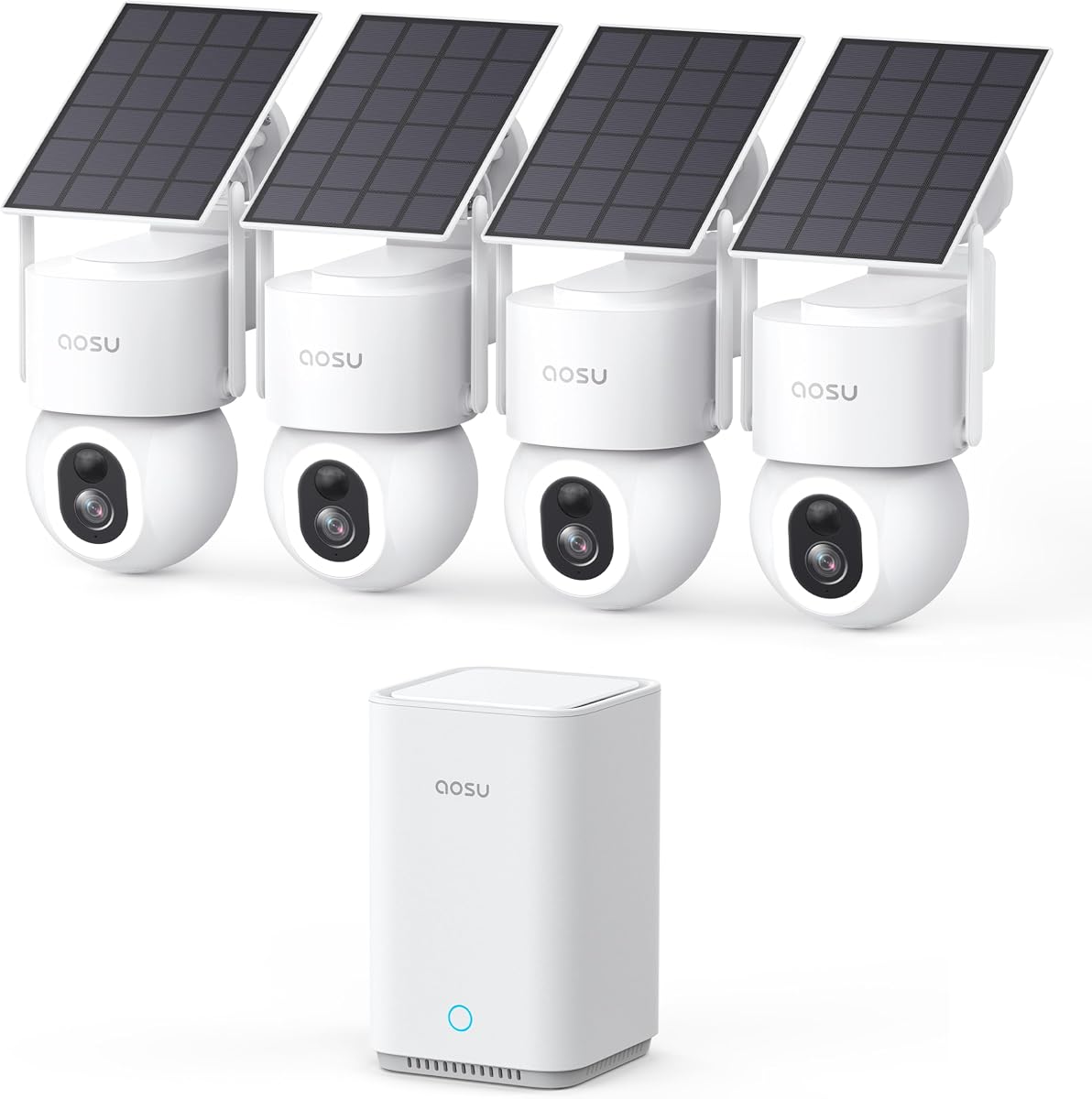
Solar Security Cameras: Power, Coverage, and Storage Considerations
When considering a solar-powered security camera like the aosu SolarCam D1 Max 4-Cam Kit, you’re investing in a system that promises continuous outdoor surveillance without the hassle of wiring or recurring fees. This guide focuses on key aspects such as 4K resolution, 360° pan-tilt coverage, and local storage up to 1TB, which are central to the D1 Max’s value proposition.
Key Considerations Before Buying
- Solar panel efficiency is critical: Ensure the camera’s solar panel can generate enough power in your typical sunlight conditions. The D1 Max’s solar panel should be positioned to receive at least a few hours of direct sunlight daily to maintain battery charge during overcast periods.
- Pan and tilt capabilities matter for coverage: A 360° pan and tilt system eliminates blind spots, but its speed and responsiveness can affect auto-tracking performance. Look for smooth, quiet motor operation and adjustable tracking sensitivity to avoid false triggers from moving tree branches or passing cars.
- Local storage capacity defines your recording history: With up to 1TB of local storage, you can retain weeks of footage without cloud fees. Verify that the camera supports continuous recording versus event-based only, and check for easy retrieval of clips from a mobile app or web interface.
What Our Analysts Recommend
Quality indicators in this category include robust weatherproofing (an IP65 or higher rating), a high-efficiency solar panel with monocrystalline cells, and a low-light sensor that provides color night vision without excessive noise. Additionally, ensure the camera’s auto-tracking algorithm can distinguish people, vehicles, and animals to reduce false alerts.
Dome Cameras Market Context
Market Overview
The solar security camera market has matured significantly, with models now offering 4K resolution, advanced motion tracking, and reliable local storage. Brands like aosu compete by bundling multiple cameras with no subscription fees, appealing to homeowners seeking long-term cost savings.
Common Issues
Common problems include inconsistent solar charging in shaded or northern climates, poor Wi-Fi connectivity at the camera’s mounting location, and mobile app interfaces that are clunky or lack essential features like customizable motion zones. Some users also report that auto-tracking can be jittery or fail to follow subjects smoothly.
Quality Indicators
High-quality units feature durable weather-sealed housings, high-conversion-efficiency solar panels, and reliable Wi-Fi modules that support 2.4 GHz and 5 GHz bands. A responsive mobile app with geofencing, activity zones, and push notifications is a hallmark of a well-designed system.
Review Authenticity Insights
Grade B Interpretation
With an authenticity grade of B and an estimated 15% fake review rate, the aosu SolarCam D1 Max 4-Cam Kit has a majority of genuine reviews, but roughly one in seven may be unreliable. This suggests you can generally trust the product’s positive feedback, but you should read reviews critically, especially those lacking specific details.
Trust Recommendation
Focus on verified purchase reviews that describe installation challenges, solar performance in different weather, and long-term reliability. Be cautious of overly short, glowing reviews or those that mention only generic benefits like 'easy setup' without specifics. Cross-reference any claims about battery life or tracking accuracy with multiple detailed accounts.
Tips for Reading Reviews
For solar cameras, look for reviews that mention the camera’s performance in winter months or after prolonged overcast conditions. Also, pay attention to comments about the mobile app’s usability and the responsiveness of customer support, as these are common pain points in this category.
Expert Perspective
The aosu SolarCam D1 Max 4-Cam Kit offers a compelling package for homeowners who want comprehensive coverage without monthly fees, but the 15% fake review rate warrants cautious optimism. Its 4K resolution, 360° coverage, and 1TB local storage are strong selling points, though the auto-tracking and solar efficiency may vary based on installation and environment. The adjusted rating of 4.10/5 indicates solid performance, but not class-leading, especially when compared to more established brands with lower fake review rates.
Purchase Considerations
Weigh the convenience of solar power against the need for consistent sunlight—if your home is heavily shaded, you might still need to run a cable or install a separate solar panel. Also, consider whether 4K resolution is necessary for your property; 2K cameras often provide sufficient detail with lower bandwidth and storage demands.
Comparing Alternatives
Shoppers should compare this kit with other solar-powered systems from brands like Reolink, Eufy, and Arlo, which offer similar features but may have different app ecosystems, storage options, and track records for reliability.


