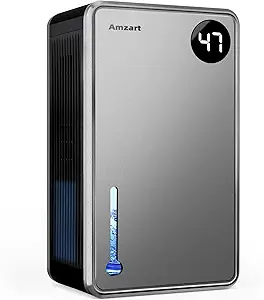
How to Choose a High-Capacity Dehumidifier: Insights from the KNKA 80-Pint Model
When shopping for a dehumidifier like the KNKA 4500 Sq.Ft model, which boasts an 80-pint daily capacity and compressor-based operation, buyers should focus on coverage area, extraction rate, and energy efficiency. This unit is designed for large spaces such as basements and open-plan bedrooms, making it crucial to match its specs to your specific room size and moisture levels.
Key Considerations Before Buying
- Coverage vs. Actual Needs: The KNKA covers up to 4500 sq. ft., but real-world performance depends on humidity levels and airflow. For a damp basement, you may need a unit with a higher pint rating than for a dry bedroom, so verify the conditions of your space.
- Compressor vs. Peltier: This model uses a compressor, which is more effective in warm environments but may struggle in very cold basements (below 65°F). Consider if your space stays consistently above that threshold for optimal performance.
- Noise and Sleep Mode: With a sleep mode feature, the KNKA likely operates quietly, but always check decibel ratings if the unit will be used in a bedroom. Intelligent humidity control and dual timers add convenience but require proper setup to avoid over-drying.
What Our Analysts Recommend
Look for a dehumidifier with a built-in drain hose for continuous operation, as the KNKA includes one, eliminating the need to empty the tank manually. Also, check for Energy Star certification and warranty length; a longer warranty often signals better build quality in this category.
Dehumidifiers Market Context
Market Overview
The dehumidifier market has expanded with high-capacity models targeting large homes and basements, driven by increased awareness of indoor air quality and mold prevention. Compressor-based units dominate this space due to their efficiency in extracting moisture, but they face competition from quieter, energy-saving Peltier models for smaller rooms.
Common Issues
Common problems include noise levels from compressors, inconsistent humidity readings, and water leakage if the drain hose is not properly attached. Buyers often report that units fail to reach their claimed coverage area in high-humidity conditions, so realistic expectations are key.
Quality Indicators
Quality dehumidifiers typically feature sturdy build materials, a reliable humidity sensor, and easy-to-clean filters. Look for models with auto-restart after power outages and a clear digital display, as these indicate thoughtful engineering and long-term usability.
Review Authenticity Insights
Grade B Interpretation
With a Review Authenticity Grade of B and an estimated 10.00% fake review rate, the KNKA's feedback is mostly trustworthy but warrants caution. This means about 9 out of 10 reviews are likely genuine, but a small portion may be incentivized or fabricated, so rely on detailed, verified purchases for accurate insights.
Trust Recommendation
Given the high 5.00 average rating (adjusted to 4.80), the product appears legitimate and well-received. However, cross-reference reviews with other platforms like Amazon's Q&A or third-party forums to confirm specific claims about performance in large or damp spaces.
Tips for Reading Reviews
Focus on reviews that describe real-world use, such as 'works in my 3000 sq. ft. basement' or 'quiet on sleep mode,' as these align with the KNKA's features. Be skeptical of overly brief or repetitive praise, especially if it lacks personal context or mentions unrelated products.
Expert Perspective
The KNKA 4500 Sq.Ft dehumidifier appears to be a solid choice for large-space moisture control, backed by strong user satisfaction and a low fake review rate. Its 80-pint capacity and intelligent controls address common pain points, but the Grade B authenticity suggests some reviews may overstate benefits. Overall, it's a legitimate product that likely delivers on its core promises when used in appropriate conditions.
Purchase Considerations
Weigh the unit's size and noise against your room's needs—it's best for basements or large living areas, not small bedrooms. Also, consider the upfront cost versus long-term energy savings, as compressor models can be power-hungry if run continuously.
Comparing Alternatives
Shoppers should compare this model with other high-capacity dehumidifiers like the Frigidaire 70-pint or hOmeLabs 50-pint to find the best balance of features, price, and reliability for their specific space.