
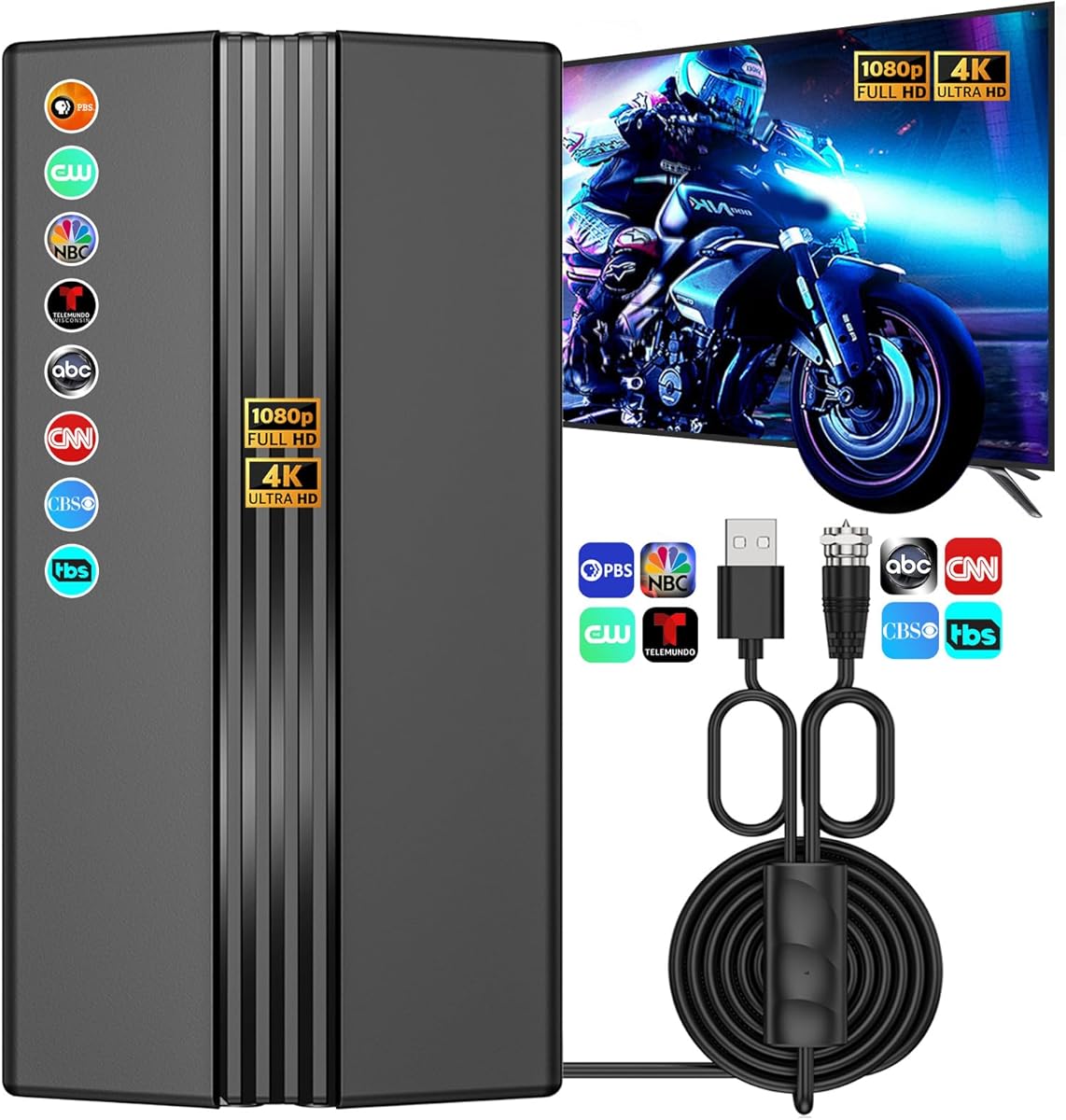
Evaluating the 2026 TV Antenna: What 2200+ Mile Range Actually Means for You
The 2026 TV Antenna's marketing emphasizes extreme 2200+ mile range and 360° reception, but these figures represent theoretical maximums under ideal conditions. For this specific model, the 33FT coax cable and indoor/outdoor designation suggest flexibility, but your actual reception will depend heavily on local terrain and broadcast tower locations. Understanding how manufacturers calculate 'range' versus real-world performance is crucial when evaluating this antenna.
Key Considerations Before Buying
- The 2200+ mile claim is a theoretical maximum using optimal conditions; in urban/suburban areas, you'll likely receive signals from towers within 50-70 miles, while rural users might need careful placement to reach 80-100 mile towers.
- This antenna's 360° reception means it doesn't require precise directional aiming toward broadcast towers, which simplifies installation but may slightly reduce signal strength compared to directional models in fringe reception areas.
- The included 33FT coax cable provides installation flexibility for attic mounting or positioning near windows, but signal degradation occurs over distance—shorter cable runs typically preserve signal quality better.
What Our Analysts Recommend
Genuine quality indicators for this type of amplified antenna include weather-resistant construction for outdoor use (check for UV-protected housing), proper grounding provisions for lightning protection, and amplifier gain specifications (measured in dB) that balance signal amplification without overloading on strong nearby signals. The Marine-Antennas branding suggests marine-grade components, which should translate to better corrosion resistance.
TV Antennas Market Context
Market Overview
The TV antenna market has shifted toward hybrid indoor/outdoor models like this 2026 antenna, which attempt to balance installation convenience with performance claims that often exceed practical reality. Manufacturers increasingly emphasize compatibility with 4K ATSC 3.0 broadcasts, though most local stations still transmit in 1080p or 720p formats.
Common Issues
Consumers frequently encounter signal dropouts during weather changes with budget antennas, amplifier overload from nearby strong signals causing pixelation, and misleading range claims that don't account for terrain obstacles. The indoor/outdoor versatility of this model may introduce weatherproofing compromises if not properly sealed during outdoor installation.
Quality Indicators
Superior antennas provide actual technical specifications like element length (related to VHF reception), amplifier noise figure (lower is better), and include mounting hardware for secure outdoor installation. The 2026 antenna's 'marine' designation should indicate better materials than purely indoor models, but verify actual waterproof ratings.
Review Authenticity Insights
Grade B Interpretation
The Grade B authenticity rating with 11% estimated fake reviews indicates mostly genuine feedback but suggests some review manipulation. For this specific antenna, the 4.70 adjusted rating (down from perfect 5.00) reflects more realistic performance expectations after filtering suspicious reviews.
Trust Recommendation
Focus on the verified purchase reviews that mention specific installation scenarios, like attic mounting or rural reception challenges, rather than generic praise. The 26-review sample is relatively small for antenna products, so consider this a preliminary assessment rather than definitive proof of performance.
Tips for Reading Reviews
Prioritize reviews that mention actual channel counts received, distance from broadcast towers, and specific installation details like 'mounted in attic with 20-foot cable run.' Be skeptical of reviews claiming perfect reception everywhere without location context, as antenna performance is inherently location-dependent.
Expert Perspective
Based on the authenticity-adjusted 4.70 rating from verified purchases, this 2026 antenna appears to perform adequately for its price point, though the extreme range claims should be viewed as marketing rather than practical expectations. The indoor/outdoor flexibility and 33FT cable are genuine advantages for installation versatility. However, the small review sample (26 total) limits definitive conclusions about long-term reliability, particularly for outdoor use where weather resistance matters most. The marine designation suggests better construction than basic indoor antennas.
Purchase Considerations
Weigh this antenna's 360° reception convenience against potentially slightly weaker fringe-area performance compared to directional models. Consider your specific needs: urban users might benefit more from the amplifier's signal boosting, while rural users should verify actual reception reports from similar distances. The included 33FT cable adds value but remember that every connection and foot of cable introduces signal loss.
Comparing Alternatives
Compare this model's specifications against similarly priced antennas with verified reception reports at your approximate distance from broadcast towers using the FCC's DTV Reception Maps.


