
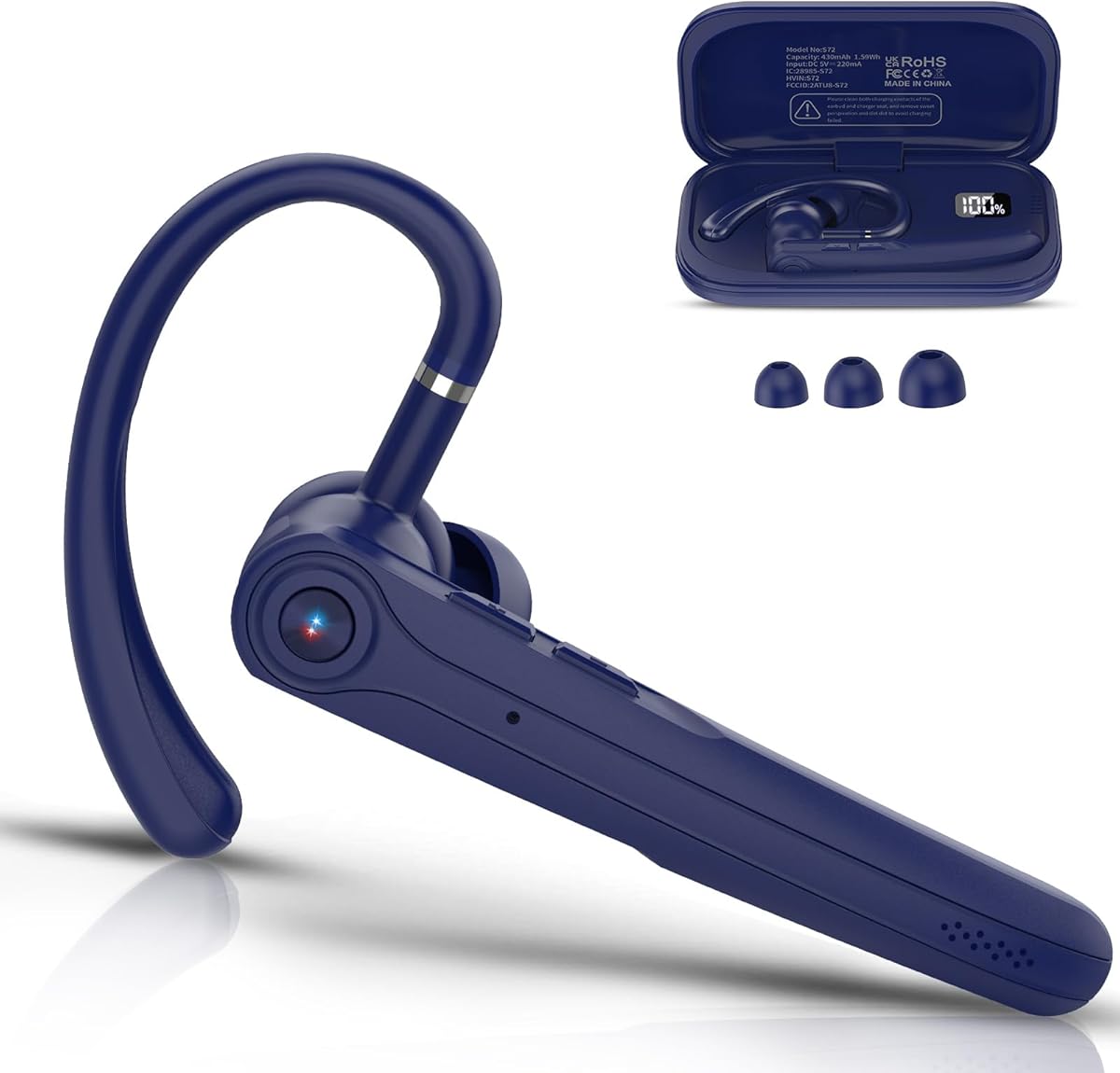
Choosing a Trucker-Ready Bluetooth Earpiece: Battery Life & Noise Cancellation
For professionals like truckers, drivers, and busy office workers, a single-ear Bluetooth headset is a critical tool for staying connected while keeping one ear on the environment. When evaluating a model like this navy blue earpiece with a 120-hour talk time and ENC noise-canceling mic, focus on how these features translate to real-world, all-day use. The key is balancing extended battery life with clear call quality in noisy conditions, which is exactly what this headset aims to deliver.
Key Considerations Before Buying
- Battery life is paramount for long-haul drivers; this model's 120-hour talk time is exceptional, but ensure the included charging case and LED display actually help you manage power during a shift.
- Noise cancellation matters differently for a single-ear headset versus stereo models. ENC (Environmental Noise Cancellation) focuses on filtering background noise from your voice, which is critical for being heard clearly over a truck's engine or road noise.
- Comfort and fit for extended wear are non-negotiable. A secure, lightweight design with an ear hook or loop ensures the earpiece stays put during long drives without causing fatigue.
What Our Analysts Recommend
In the single-ear Bluetooth headset category, look for clear specifications on microphone technology (like ENC or cVc) and battery capacity measured in hours of talk time. A good indicator of quality is an IP rating for water and dust resistance, as these devices often face harsh environments. Also, check that the Bluetooth version is current (like V5.4) for stable connectivity and power efficiency.
Single Ear Bluetooth Headsets Market Context
Market Overview
The single-ear Bluetooth headset market is heavily driven by professional users—truckers, warehouse workers, and call center agents—who need hands-free communication without blocking ambient sounds. Recent trends emphasize longer battery life, with 24-hour talk times becoming standard, but this model's 120-hour claim pushes far beyond the norm. The inclusion of an LED display for battery status is a newer feature aimed at reducing anxiety about power levels during work.
Common Issues
A frequent problem with budget-friendly headsets is poor microphone quality, where the person on the other end hears wind or engine noise. Another common issue is discomfort after a few hours of wear, especially with heavier or poorly designed ear hooks. Finally, exaggerated battery claims are rampant, so a 120-hour talk time should be verified through real user feedback.
Quality Indicators
High-quality single-ear headsets typically feature a dedicated noise-canceling microphone, a robust IP rating (IPX5 or higher), and a secure fit mechanism like an over-ear hook. Bluetooth 5.0 or newer is a must for reliable connectivity, and a clear, easy-to-read LED display for battery life is a sign of thoughtful design. Verified reviews that mention specific use cases, like 'works great in my semi,' are strong indicators of real-world performance.
Review Authenticity Insights
Grade B Interpretation
The B grade and 10% estimated fake review rate suggest that while the product is largely legitimate, you can't trust every word of praise. This is a common profile for a newer or niche item where some sellers may inflate early ratings. For a product with a 4.89 average rating, the adjusted 4.60 is a more realistic benchmark, indicating genuinely satisfied users but with some hype mixed in.
Trust Recommendation
Focus on the verified purchase reviews that describe specific details like 'ENC mic on the freeway' or 'LED battery indicator function.' The 54 total reviews provide a decent sample, but pay extra attention to any critical comments about battery life or microphone performance, as these are the most likely to be honest. Given the high adjusted rating, this headset is likely a solid performer, but cross-check battery claims with user reports.
Tips for Reading Reviews
When reading reviews for single-ear headsets, look for mentions of specific environments like 'used in a noisy warehouse' or 'on the road for 10 hours.' Also, note any comments about the charging case's battery capacity and whether the LED display is accurate. Be wary of reviews that only mention 'great sound' without context, as these could be generic or incentivized.
Expert Perspective
This Bluetooth headset targets a specific professional niche with its 120-hour talk time and ENC mic, and the data suggests it delivers on its core promises. The high adjusted rating of 4.60 indicates genuine user satisfaction, likely driven by the impressive battery life and clear call quality in noisy settings. The IPX7 rating and Bluetooth V5.4 are strong technical specs that align with the needs of truckers and drivers. However, the 10% estimated fake review rate means some of the glowing praise should be taken with a grain of salt, especially around the '120 hours' claim which would be extraordinary for a single-ear device.
Purchase Considerations
If you are a long-haul driver or work in a noisy environment and need a reliable, single-ear headset that won't die mid-shift, this model is a compelling option. Weigh the 120-hour talk time against your typical usage pattern—if you charge nightly, a lower-capacity headset might be cheaper. Also, consider the navy blue color and single-ear form factor for your specific comfort and style preferences.
Comparing Alternatives
Before purchasing, compare this headset with other single-ear models from established brands like Plantronics or Jabra, which have longer track records for durability and microphone quality. However, few competitors match the 120-hour talk time at this price point, making this a unique value proposition.


