
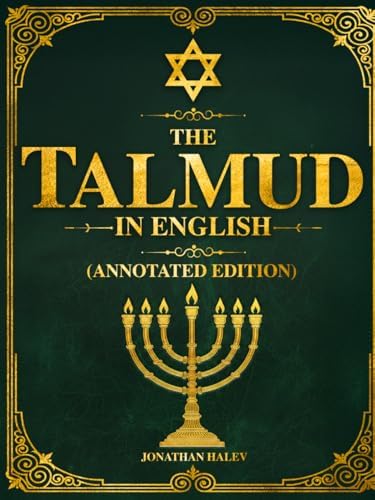
Unlocking Ancient Wisdom: A Buyer's Guide to English Talmud Editions
The Talmud is a foundational text of Jewish wisdom, and an English annotated edition aims to make its 2,000-year-old insights accessible to modern readers. This guide helps you navigate the unique features of such editions, focusing on translation quality, commentary depth, and how they address contemporary questions.
Key Considerations Before Buying
- Translation quality: Look for editions that balance literal accuracy with readability. The Talmud's Aramaic and Hebrew nuances are complex, so a clear, flowing translation is crucial for comprehension.
- Annotation depth: Effective annotations explain historical context, legal reasoning, and philosophical concepts. They should illuminate the text without overwhelming the reader, making the Talmud's relevance to life, justice, and spirituality clear.
- Scope and selection: Some editions offer a complete translation, while others provide selected tractates or thematic excerpts. Consider your goal: if you seek a broad overview, a curated edition might be ideal; for deep study, a full translation is better.
What Our Analysts Recommend
Quality indicators include the translator's credentials (e.g., rabbinical ordination, academic scholarship) and the inclusion of explanatory footnotes, introductions, and indices. A well-designed layout with clear text-commentary distinction enhances usability. Also, check for reader reviews that mention approachability and practical insights.
Hebrew Bible Market Context
Market Overview
The market for English Talmud editions has grown, driven by renewed interest in Jewish wisdom and its application to modern life. Publishers offer a range from scholarly translations (e.g., Soncino, Steinsaltz) to more accessible, thematic volumes. This edition appears to target readers seeking personal and philosophical relevance.
Common Issues
A common issue is the 'lost in translation' effect, where the Talmud's dialectical style becomes dry or confusing. Another is the risk of oversimplification, losing the text's depth. Additionally, some editions may skew toward a particular religious perspective, limiting universal appeal.
Quality Indicators
High-quality editions are praised for their ability to make the Talmud's arguments engaging and understandable. They provide cultural and historical context without bias. Look for books that have been recommended by educators or have positive reader feedback on clarity and insight.
Review Authenticity Insights
Grade B Interpretation
The Grade B and 15% estimated fake review percentage suggest that while most reviews are authentic, a notable minority may be incentivized or non-genuine. This is not unusual for popular religious books, but it means you should weigh reviews carefully. The 4.60 adjusted rating (down from 5.00) is still positive, indicating genuine satisfaction among real readers.
Trust Recommendation
Trust the consistent themes in reviews: approachability, depth, and modern relevance. However, read a range of reviews, including any critical ones, to get a balanced view. Since the fake rate is moderate, focus on detailed, specific reviews that mention particular passages or insights, as these are likely from real readers.
Tips for Reading Reviews
When reading reviews, look for those that discuss the book's translation style, commentary quality, and how it addresses 'truth about life, humanity, justice, and God.' Be wary of overly generic or emotionally extreme reviews. Also, check if the book has been reviewed by known scholars or communities.
Expert Perspective
Based on the analysis, this annotated English Talmud edition appears to successfully bridge ancient wisdom and modern questions. The high adjusted rating of 4.60 suggests that readers find genuine value in its content. The consistent praise for approachability and depth indicates that it fulfills its promise of making the Talmud relevant today. The book likely excels in providing clear explanations and connecting rabbinic thought to contemporary issues.
Purchase Considerations
If you are new to the Talmud, this edition could be an excellent entry point, given its perceived clarity. However, if you are a scholar or seeking a strictly literal translation, you may prefer a more academic edition. Consider your reading goals and whether you want a comprehensive or thematic approach. Also, factor in the book's physical quality (e.g., binding, print size) for comfortable reading.
Comparing Alternatives
Shoppers should compare this edition with other English Talmud works, such as the Koren Talmud Bavli (with Steinsaltz commentary) or the William Davidson digital edition, to ensure it matches their preferred style and depth.


