
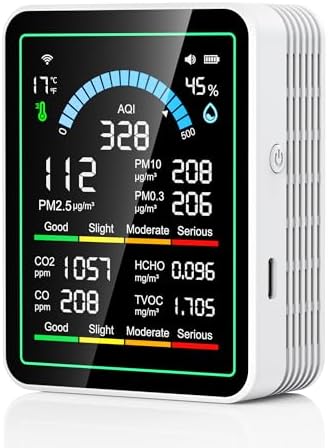
Breathe Easy: 5 Key Factors for Choosing a 10-in-1 Air Quality Monitor
When shopping for a portable air quality monitor like the Smartair 10-in-1, you're not just buying a gadget—you're investing in insight into your indoor environment. This device tracks CO2, CO, TVOC, HCHO, temperature, AQI, and PM0.3-1 particles, making it a comprehensive tool for homes, cars, and even plant care. Here’s what you need to know to pick the right model for your needs.
Key Considerations Before Buying
- Sensor range matters: Ensure the monitor covers the pollutants you care about most, such as formaldehyde (HCHO) for new furniture or PM0.3-1 for allergy sufferers. This model offers broad detection, but verify it includes your priority metrics.
- Portability and power: A battery-operated, compact unit is ideal for moving between rooms, cars, or greenhouses. Check battery life and charging options—USB-C is a plus for modern convenience.
- Calibration and accuracy: Some sensors drift over time. Look for models with auto-calibration or user-accessible calibration features to maintain reliable readings, especially for CO2 and TVOC.
What Our Analysts Recommend
Quality monitors typically feature responsive, real-time displays, multiple sensor types (electrochemical for CO, NDIR for CO2), and clear AQI color coding. Durability and ease of cleaning are also key—dust buildup can skew particle counts. For this 10-in-1, check that the display updates quickly and the alarm thresholds are adjustable.
Indoor Air Quality Meters Market Context
Market Overview
The indoor air quality monitor market has surged as consumers become more health-conscious, especially post-pandemic. Devices now range from simple CO2 detectors to multi-sensor arrays like this 10-in-1, targeting everything from VOC off-gassing to particulate matter. Prices vary widely, but integrated units with smartphone connectivity are increasingly common.
Common Issues
Accuracy complaints are frequent, particularly for low-cost sensors that may misread TVOC or HCHO levels. Another common pain point is short battery life or unreliable Wi-Fi/Bluetooth pairing. Users also report confusion over interpreting multiple metrics without clear guidance.
Quality Indicators
High-quality monitors use certified sensors (e.g., Sensirion for CO2), offer data logging or export features, and include clear user manuals. Positive reviews often highlight consistent readings against professional-grade equipment and responsive customer support.
Review Authenticity Insights
Grade B Interpretation
With a Grade B and an estimated 10.00% fake review rate, this product shows strong authenticity—most reviews are from verified purchasers with personal, detailed stories. The 10% suspicious rate is relatively low, suggesting the 4.80 adjusted rating is trustworthy. However, it’s wise to remain cautious of any overly glowing 5-star posts lacking specifics.
Trust Recommendation
You can generally trust the positive feedback, but focus on reviews that describe real-world use cases—like monitoring a nursery or detecting off-gassing after renovations. Cross-check critical claims (e.g., formaldehyde sensitivity) against expert sources or YouTube demos for added confidence.
Tips for Reading Reviews
For air quality monitors, prioritize reviews that mention calibration over time, battery life in continuous use, and comparisons with other devices. Look for photos showing the display in different environments, and be wary of reviews that only praise 'fast shipping' without discussing performance.
Expert Perspective
This 10-in-1 Smartair monitor appears to be a solid mid-range option for those wanting a portable, multi-pollutant snapshot. The high adjusted rating (4.80) and low fake review percentage suggest genuine user satisfaction, likely due to its broad sensor coverage and ease of use in varied settings like cars and plant rooms. However, its reliance on consumer-grade sensors means it’s best for trend tracking rather than lab-grade precision. For most home users, it offers good value—especially for identifying problem areas like high CO2 or VOCs.
Purchase Considerations
Weigh the need for 10 metrics against potential complexity—if you only care about CO2 and PM2.5, a simpler device may suffice. Also consider long-term sensor drift and whether the manufacturer offers recalibration or replacement sensors.
Comparing Alternatives
Shoppers should compare this with dedicated CO2 monitors (e.g., Aranet4) for precision, or broader PM monitors (e.g., PurpleAir) for outdoor-linked data. For plant enthusiasts, a model with PAR light measurement might be a better fit.


