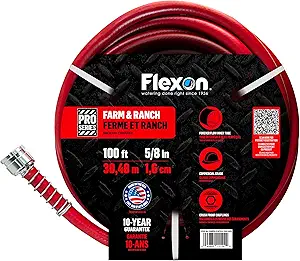
100-Foot Non-Expanding Hose: Flexibility vs. Reel Compatibility—What to Know
When you're eyeing a 100-foot garden hose, you're committing to serious reach, but that length brings unique challenges like weight, kinking, and storage. This non-expanding, ultra-flexible model promises burst resistance and all-weather durability, yet the reviews reveal a critical nuance: performance on a reel can be a make-or-break factor.
Key Considerations Before Buying
- Length vs. weight: At 100 feet, even a 'lightweight' hose can be heavy when full of water. Look for a hose that is manageable to drag around your yard, especially if you have a large lawn or multiple watering zones.
- Kink resistance: A 'kink-free' claim is great, but real-world kinking often happens at the connections or when the hose is bent sharply. Check if the hose has a reinforced design or a special collar to prevent kinks at the faucet end.
- Reel compatibility: If you plan to store the hose on a reel, pay close attention to how it winds. Some non-expanding hoses are too stiff or bulky for standard reels, leading to tangles and difficult retraction—a common issue noted in user feedback.
What Our Analysts Recommend
Quality indicators include the hose's wall thickness (often measured in 'mil'—higher is more durable), the material (e.g., hybrid polymer vs. rubber), and the burst pressure rating (look for at least 400 PSI). Also, check the diameter (standard is 5/8 inch for good flow) and whether the fittings are solid brass or plastic; brass is more durable and leak-resistant.
Garden Hoses Market Context
Market Overview
The garden hose market has seen a surge in 'non-expanding' and 'ultra-flexible' models, as consumers move away from traditional heavy rubber hoses that are prone to kinking. Brands compete on features like burst resistance and all-weather flexibility, but these claims often vary widely in real-world performance.
Common Issues
Common problems in this category include hoses that kink despite marketing claims, fittings that leak or break, and hoses that become stiff in cold weather. Another frequent complaint is that 'lightweight' hoses are still heavy at longer lengths, and some 'flexible' hoses are difficult to wind onto reels.
Quality Indicators
Look for hoses with a high burst pressure rating (600+ PSI for extra safety), a crush-resistant brass coupling, and a flexible core that maintains performance in both hot and cold temperatures. Check the warranty—a longer warranty (e.g., 5 years) often signals manufacturer confidence. Also, read reviews for mentions of 'reel use' to see if the hose works well with your storage setup.
Review Authenticity Insights
Grade B Interpretation
The Grade B and 15% estimated fake review rate suggest that while most reviews are genuine, a notable minority may be incentivized or fabricated. This means the 4.56-star average is slightly inflated; the adjusted 4.20 rating is a more realistic expectation. The presence of a highly specific one-star review about reel issues adds credibility to the overall review set, as it highlights a real-world flaw.
Trust Recommendation
Given the moderate fake review rate, you should trust the overall positive sentiment but weigh the critical reviews heavily. The one-star review about reel compatibility is a red flag if you plan to use a reel. Look for verified purchase tags and detailed reviews that mention specific pros and cons, as these are more likely to be authentic.
Tips for Reading Reviews
For garden hoses, focus on reviews that mention the hose's behavior in different seasons (e.g., winter stiffness) and with different storage methods (reel vs. coil). Also, check for reviews that include photos or videos—these are harder to fake and offer visual proof of kinking or flexibility. Be wary of reviews that are overly generic or lack specifics about the hose's performance.
Expert Perspective
This 100-foot non-expanding hose appears to be a solid choice for those who need extended reach and prioritize flexibility, but the adjusted rating of 4.20 suggests it's not flawless. The key concern is reel compatibility, which could be a dealbreaker for many users. The burst-resistant and all-weather claims are likely true, but the hose's physical characteristics (stiffness, weight) may not suit every storage method.
Purchase Considerations
Before buying, consider how you'll store the hose. If you don't use a reel, the hose's flexibility and kink resistance are likely to satisfy. If you do use a reel, look for reviews that specifically address reeling and consider a shorter length (e.g., 50-75 feet) to reduce weight and stiffness. Also, factor in the 15% fake review rate—don't base your decision solely on the star rating.
Comparing Alternatives
Shoppers should compare this hose with other non-expanding models, particularly those with higher burst pressures or different materials (e.g., rubber vs. hybrid polymer). Also, consider a hose with a flexible core that is specifically designed for reel use, if that's a priority.