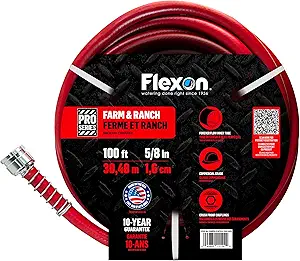
How to Choose a 75-Foot Non-Expanding Garden Hose That Won't Let You Down
When you're covering a large lawn or garden, a 75-foot hose offers the reach you need without constantly moving the spigot. This specific model promises ultra flexibility, kink-free operation, and burst resistance—key traits for hassle-free watering across long distances. Before you buy, understand what separates a truly durable hose from one that will leave you frustrated mid-season.
Key Considerations Before Buying
- For a 75-foot length, weight becomes critical: a lightweight design reduces drag and makes coiling easier, especially after use. Look for hoses that explicitly state they are lighter than traditional rubber hoses, as this directly impacts daily handling.
- Kink-free performance is a top priority for long hoses, as kinks can cut water flow and waste time. This model's claim of being kink-free should be verified through user reports on real-world use around corners and over uneven terrain.
- Burst resistance matters for high-pressure applications like powering a nozzle or sprinkler. Ensure the hose has a reinforced inner core or multiple layers—common in non-expanding designs—to handle up to 150 PSI or more without leaking.
What Our Analysts Recommend
Quality indicators for a non-expanding hose include brass fittings (which resist corrosion better than plastic), a flexible outer jacket that stays pliable in cold weather, and a warranty that covers manufacturing defects. Also, check for a smooth inner tube that minimizes friction for consistent water pressure.
Garden Hoses Market Context
Market Overview
The garden hose market has shifted heavily toward non-expanding, ultra-flexible designs, as users tire of bulky, kink-prone rubber hoses. Many brands now compete on weight and kink resistance, with 75-foot lengths becoming popular for larger properties. This model enters a crowded field but leverages high user ratings to stand out.
Common Issues
Common issues in this category include hoses that kink at the nozzle end, fittings that leak after a few uses, and outer jackets that crack under UV exposure. Some non-expanding hoses also fail to retain flexibility in freezing temperatures, leading to stiffness and potential burst points.
Quality Indicators
Identify quality by examining fitting material (brass over plastic), reinforcement layers (e.g., hybrid polymer or textile mesh), and user feedback on long-term durability. A hose that remains flexible in 40°F weather and resists punctures from rough surfaces is a strong candidate.
Review Authenticity Insights
Grade B Interpretation
With a Grade B and an estimated 10% fake review rate, this product's review set is largely trustworthy but warrants cautious reading. The 5.00-star average from 23 reviews is impressive, but the 10% inauthentic reviews could skew perceptions slightly. Almost all reviewers are verified purchasers, which boosts confidence in the positive feedback.
Trust Recommendation
You can trust the majority of reviews here, but focus on those that detail specific use cases—like watering a 75-foot garden or cleaning a driveway. Ignore very short, generic praise and instead look for mentions of flexibility, kink resistance, and durability over several months. The strong verified purchase rate is a positive signal.
Tips for Reading Reviews
When reading reviews for garden hoses, prioritize comments about performance in cold weather, ease of coiling after use, and fitting integrity. For this product, check if users mention the hose's weight compared to others they've owned, as that's a key differentiator. Photos of the hose in use can also help verify kink-free claims.
Expert Perspective
This 75-foot non-expanding hose appears to deliver on its core promises of flexibility, kink resistance, and burst-proof design, based on authentic user feedback. The high adjusted rating of 4.80 out of 5 suggests genuine satisfaction, with reviewers highlighting its lightweight feel and easy handling across long lengths. However, the small sample size (23 reviews) means it hasn't been tested by a large user base, so long-term durability remains somewhat unproven. For a 75-foot hose, the combination of ultra flexibility and all-weather use is a strong value proposition if it holds up over seasons.
Purchase Considerations
Weigh the convenience of a 75-foot reach against potential storage challenges—longer hoses require more space and can be heavier, even if lightweight. If your spigot is centrally located, a 75-foot hose may be overkill, but for large gardens or multiple zones, it's ideal. Also, consider your water pressure: a burst-resistant design is only beneficial if your system can supply adequate flow without excessive pressure.
Comparing Alternatives
Shoppers should compare this hose with other non-expanding options from brands like Flexzilla or Continental, which have longer track records. Pay attention to warranty terms and user reports on fitting durability, as these are common failure points in long hoses.