
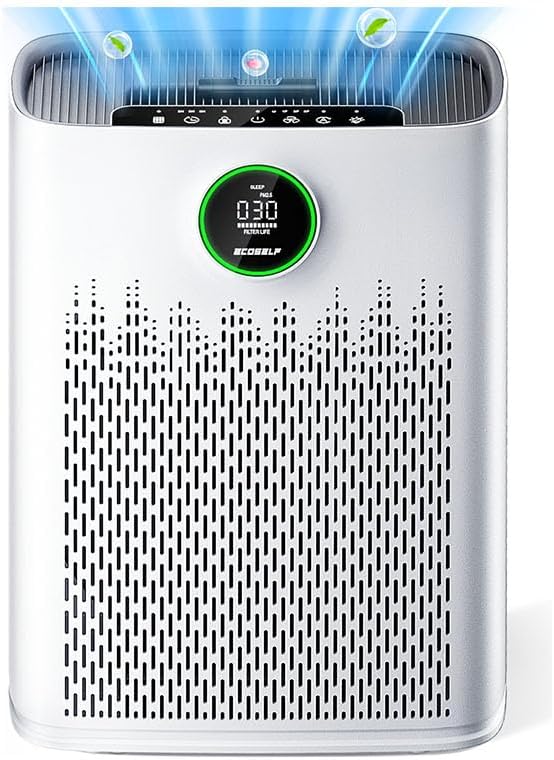
How to Choose a Large Room Air Purifier: Smart Features and Filtration Matter
When selecting an air purifier for a large room, like the HAP603 model covering up to 2400 sq ft, you need to balance coverage area, filtration efficiency, and smart features. This guide focuses on key aspects such as True HEPA filters for allergen removal, smart mode with PM2.5 display for real-time air quality tracking, and sleep mode noise levels for undisturbed rest.
Key Considerations Before Buying
- Coverage area is critical: Ensure the purifier's CADR rating matches your room size—2400 sq ft suggests a high CADR for large open spaces or multiple rooms.
- Filter type and maintenance: True HEPA filters capture 99.97% of particles, but check if the filter is washable or replaceable to gauge long-term costs.
- Smart features like auto mode and air quality display can optimize performance, but verify they offer accurate PM2.5 readings and responsive adjustments.
What Our Analysts Recommend
Quality indicators include a 360° air outlet for even distribution, 2X-purification technology for faster cleaning, and aromatherapy compatibility for added functionality. Also, look for low decibel ratings in sleep mode (like 22dB) to ensure quiet operation at night.
HEPA Air Purifiers Market Context
Market Overview
The large room air purifier market is growing rapidly, driven by increased awareness of indoor air pollution from wildfire smoke, allergens, and VOCs. Products now emphasize smart connectivity and multi-stage filtration, but consumers often struggle with exaggerated coverage claims versus real-world performance.
Common Issues
Common problems include misleading coverage specs (e.g., using low fan speed for max area), high filter replacement costs, and inconsistent sensor accuracy for auto modes. Noise levels can also be underreported, especially at higher fan speeds.
Quality Indicators
Look for third-party certifications like AHAM Verifide for CADR, true HEPA standards (not HEPA-type), and user reviews that mention specific use cases (e.g., 3D printing fumes, pet dander). Verified purchase reviews with personal context are strong signals of quality.
Review Authenticity Insights
Grade B Interpretation
A Grade B with 10.00% estimated fake reviews indicates that most reviews are genuine, but a small fraction may be incentivized or fabricated. This is acceptable for a product with 134 reviews and a 5.00/5 rating, as the adjusted rating of 4.80/5 still reflects high satisfaction.
Trust Recommendation
You can trust the overall positive sentiment, but focus on verified purchase reviews that detail specific experiences—like using it for 3D printing fumes—as these are most reliable. Ignore overly generic or vague 5-star reviews lacking personal context.
Tips for Reading Reviews
For air purifiers, prioritize reviews that discuss noise levels at different speeds, filter longevity, and effectiveness in real rooms (e.g., 500 sq ft vs. 2400 sq ft). Look for photos of the air quality display or filter to confirm claims.
Expert Perspective
The HAP603 air purifier appears to be a well-regarded option for large spaces, with strong authenticity signals from verified buyers who praise its performance for specific needs like 3D printing fumes. The 22dB sleep mode and 360° air outlet are standout features that address common pain points like noise and coverage. With a 4.80/5 adjusted rating, it likely delivers on its promises for most users, though the 10% fake rate warrants slight caution.
Purchase Considerations
Consider this unit if you need robust filtration for a large open area or workshop, and value smart features like PM2.5 display. However, verify the CADR rating for your specific room size and factor in filter replacement costs over time.
Comparing Alternatives
For comparison, explore other large room purifiers with similar coverage and smart features, such as those from Coway or Winix, which also have strong review authenticity and proven track records.


