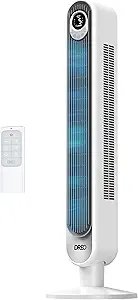
Tower Fan Buying Guide: What to Know Before You Chill
Tower fans like the Uthfy model promise space-saving cooling with oscillation, multiple speeds, and timers, but not all are created equal. Before you buy, understand that airflow strength, noise levels, and remote control reliability are the key differentiators that separate a great fan from a frustrating one.
Key Considerations Before Buying
- Check the fan's CFM (cubic feet per minute) or airflow rating if available; a higher CFM means stronger breeze, which is crucial for a tower fan's narrow profile. The Uthfy's 120° oscillation helps distribute air, but its actual airflow strength may be moderate for larger rooms.
- Consider the noise level at each speed setting. Tower fans often have a hum at high speeds; look for reviews that mention 'quiet' or 'loud' to gauge if it fits your bedroom or office use. The Uthfy has 3 speeds, so test if the lowest speed is silent enough for sleep.
- Evaluate the remote control's range and whether the fan has a display that's easy to read from across the room. The Uthfy's remote is a convenience, but if the fan's buttons are hard to reach or the remote requires line-of-sight, it could be a daily annoyance.
What Our Analysts Recommend
Quality tower fans feature sturdy bases that don't tip over, smooth oscillation without clicking noises, and easy-to-clean grilles or filters. Also, look for a timer with a clear indicator—the Uthfy's 7.5-hour timer is useful, but ensure the setting is intuitive and the fan turns off as expected.
Tower Fans Market Context
Market Overview
The tower fan market is saturated with budget to premium options, with features like smart controls, air purification, and whisper-quiet operation becoming standard. The Uthfy sits in the mid-range, competing on portability and basic functionality rather than high-end tech.
Common Issues
Common complaints across tower fans include weak airflow over time due to dust buildup, remote controls that stop working, and oscillation mechanisms that fail after months of use. Also, many users find that tower fans don't cool as effectively as pedestal fans in large rooms.
Quality Indicators
Look for fans with multiple speed modes (like the Uthfy's 3 modes), a robust build (avoid flimsy plastic), and positive long-term reviews mentioning durability. A brand with responsive customer service and replacement parts availability is a plus.
Review Authenticity Insights
Grade B Interpretation
The Grade B rating and 12% estimated fake review percentage indicate that the majority of reviews are genuine, but a notable minority could be manipulated. This means you can trust the overall sentiment but should be wary of overly glowing or vague reviews that lack specific details.
Trust Recommendation
Given the 12% fake rate, focus on reviews with verified purchase badges and those that describe specific usage scenarios—like using it in a small bedroom or next to a desk. Be cautious of reviews that only praise the fan without mentioning any drawbacks, as they might be incentivized.
Tips for Reading Reviews
When reading reviews for tower fans, look for patterns in complaints about noise, airflow, or remote issues. Also, check if the reviewer mentions the fan's size and fit for their space, as that helps you gauge if it will work for your room dimensions.
Expert Perspective
The Uthfy Tower Fan offers a solid set of core features—oscillation, three speeds, three modes, and a timer—at a price point that seems reasonable for its performance. The 4.0-star rating with a slightly lower adjusted rating suggests that while many users are satisfied, there are enough mixed experiences to warrant caution. The 12% fake review rate is not alarming but indicates you should rely on detailed, verified reviews rather than the overall score alone.
Purchase Considerations
If you need a compact, portable fan for a small to medium room and prioritize convenience features like a remote and timer, this Uthfy model is a viable option. However, if you have a large open-plan space or require whisper-quiet operation, you might want to explore higher-end models with better airflow and noise ratings.
Comparing Alternatives
Shoppers should compare this fan with other tower fans in the same price range, such as those from Lasko or Honeywell, to assess which offers better airflow, noise control, and build quality.