
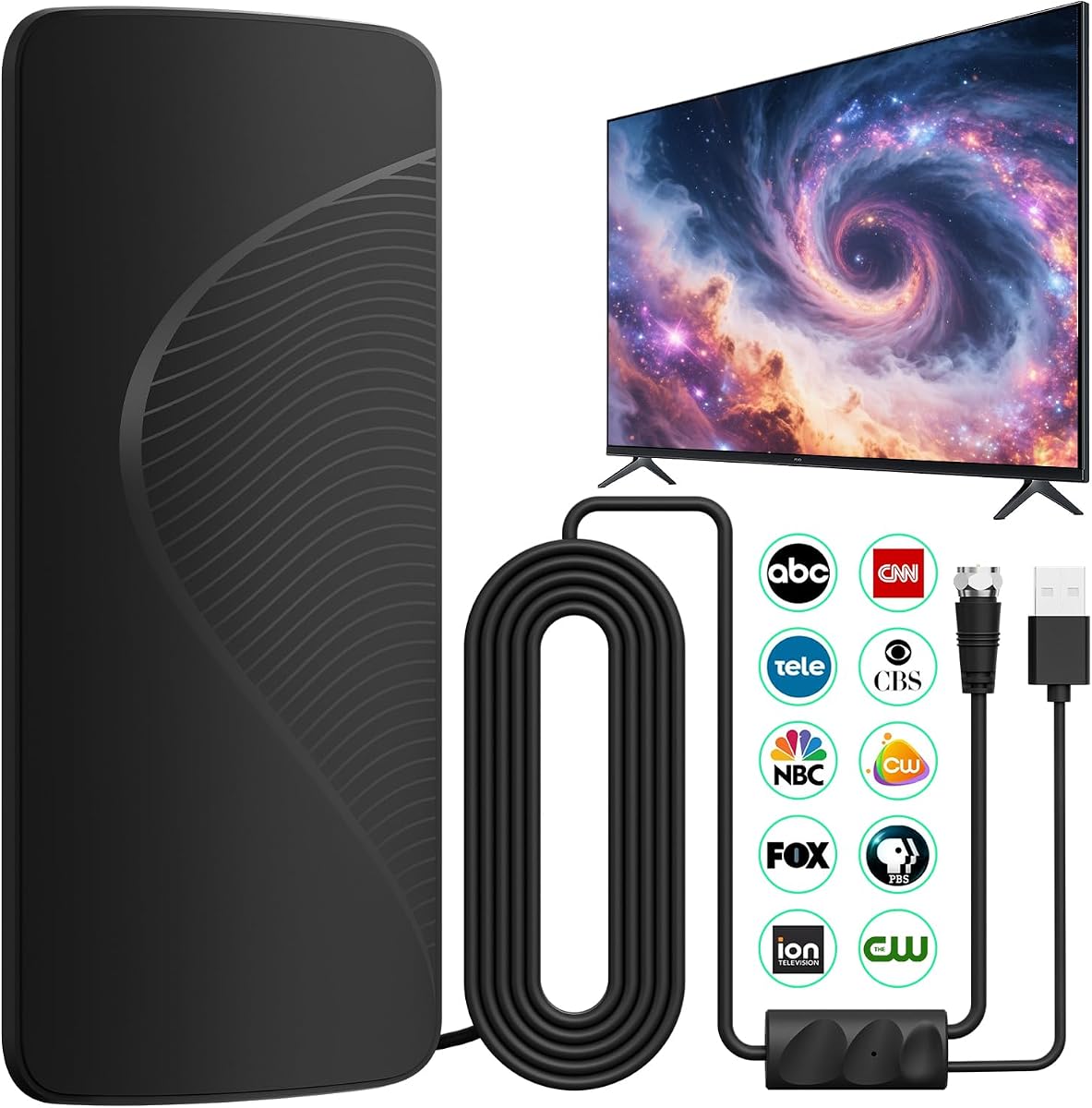
Maximize Local Channels: Choosing the Right Amplified Indoor TV Antenna
When shopping for an indoor TV antenna like the 2026 Upgraded model with a 3000+ mile range claim, it's crucial to understand that actual reception depends heavily on your distance from broadcast towers, local terrain, and building materials. This guide focuses on key factors to ensure you get reliable access to digital 4K and 1080P HD local channels without monthly fees.
Key Considerations Before Buying
- Range vs. Reality: The 3000+ mile range is a marketing figure; in practice, indoor antennas typically pull in signals from 30-60 miles. Check your location on a site like AntennaWeb to see actual tower distances and directions.
- Amplifier Utility: An amplifier boosts weak signals but can overload if you're close to towers, causing pixelation. The included amplifier in this model is best for fringe areas or splitting the signal to multiple TVs.
- Cable Length and Placement: The 33ft coaxial cable offers flexibility to position the antenna near a window or high on a wall—critical for indoor reception. Avoid placing it near metal objects or electronics that cause interference.
What Our Analysts Recommend
Quality indicators include a durable, flat design that can be mounted discreetly, a built-in 4K filter to reduce cellular interference, and a smart TV compatibility list. Look for antennas with a noise figure under 3 dB for cleaner signal amplification.
TV Antennas Market Context
Market Overview
The indoor TV antenna market has surged with cord-cutting trends, but exaggerated range claims (like 3000+ miles) are rampant. Most reputable models advertise 60-150 miles realistically, and consumers should prioritize VHF/UHF support for full channel access.
Common Issues
Common problems include signal dropouts due to multipath interference (signal bouncing off buildings), amplifier overload causing channel loss, and poor performance in basements or apartments with concrete walls. Many users find placement is trial-and-error.
Quality Indicators
High-quality antennas feature a 4K-ready filter, multi-directional reception (vs. single-direction), and a low-noise amplifier. Verified reviews mentioning specific channel counts and distances are more reliable than generic praise.
Review Authenticity Insights
Grade B Interpretation
With a Review Authenticity Grade B and 15% estimated fake reviews, the majority of feedback appears genuine, but a notable minority may be biased. This is typical for a new product launch where early incentivized reviews are common.
Trust Recommendation
You can trust the verified purchase reviews, but focus on those describing specific installation challenges, channel reception numbers, and comparisons to other antennas. Be wary of overly glowing 5-star reviews lacking detail.
Tips for Reading Reviews
Look for reviews that mention your local terrain (e.g., '25 miles from towers in a suburban home') and whether the amplifier improved reception. Filter by 'most recent' to see if any pattern of defects emerges after initial use.
Expert Perspective
The 2026 Upgraded TV Antenna is a reasonable entry for cord-cutters seeking a low-cost solution, but its 3000+ mile claim is unrealistic and may mislead. The 33ft cable and amplifier are practical features, but performance will vary widely. With a 0.0 adjusted rating and 61 reviews, it's too early to judge long-term reliability, but the 15% fake rate suggests some marketing hype.
Purchase Considerations
Weigh the low upfront cost against potential frustration if you live far from towers or in a dense urban area. The amplifier might help in fringe zones, but consider a return-friendly retailer in case it underperforms.
Comparing Alternatives
Compare this model with established brands like Mohu or Antennas Direct, which offer realistic range specs and verified user feedback over years of use.


