
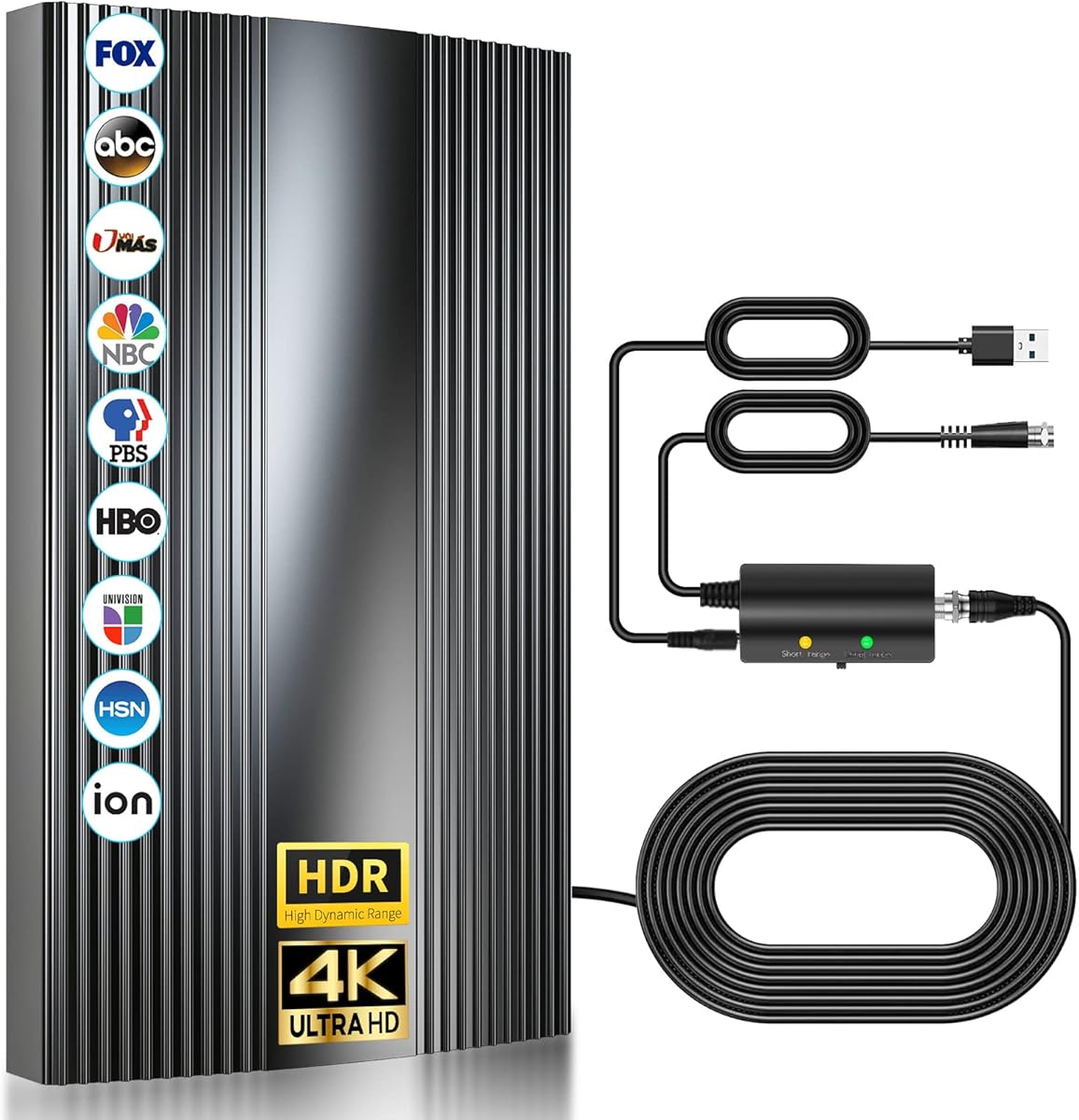
Mastering OTA TV: What the 2026 5000+ Mile Antenna Means for You
When considering an indoor TV antenna like the 2026 Upgraded model claiming a 5000+ mile range, it's crucial to understand that such figures are typically theoretical and based on ideal, unobstructed conditions. In real-world use, your distance from broadcast towers, building materials, and local terrain will significantly impact performance. This guide helps you navigate the specs to find a reliable signal for your local channels.
Key Considerations Before Buying
- Range vs. Reality: A 5000+ mile range is a marketing claim; actual reception depends on your location relative to broadcast towers. Use tools like AntennaWeb or FCC DTV Reception Maps to check real distances and signal strengths in your area.
- Amplifier Utility: The included amplifier signal booster is most effective for overcoming signal loss from long cable runs (like the 38ft coax cable included) or splitting the signal to multiple TVs. However, if you're close to towers, an amplifier can overload the tuner and actually degrade reception.
- Indoor/Outdoor Flexibility: This antenna is marketed for both indoor and outdoor use. For best results, consider mounting it in an attic or outdoors to bypass building materials like metal roofs and concrete walls that block signals.
What Our Analysts Recommend
Key quality indicators for antennas like this include a true VHF/UHF reception capability (since many channels still broadcast on VHF), a durable weather-resistant build for outdoor placement, and a pre-amp design that minimizes noise. Look for antennas with adjustable gain controls to fine-tune signal strength.
TV Antennas Market Context
Market Overview
The TV antenna market has seen a resurgence as cord-cutters seek free over-the-air (OTA) broadcasts for local news, sports, and network shows. Modern antennas now claim support for 8K and 4K signals, though actual broadcast resolution is often limited to 1080p or 720p due to ATSC 1.0 standards, with ATSC 3.0 (NextGen TV) slowly rolling out.
Common Issues
A frequent problem is that exaggerated range claims lead to buyer disappointment when antennas fail to pick up channels from 50+ miles away. Additionally, many indoor antennas struggle with multipath interference in urban areas, causing pixelation or signal dropouts. The included amplifier can sometimes introduce noise that worsens the signal.
Quality Indicators
High-quality antennas typically feature a multi-element design (like a bowtie or Yagi style) for better directionality and gain, rather than flat, paper-thin models. Look for a built-in or included LTE/5G filter to prevent cellular interference, and check for a solid coaxial connector (not the fragile push-on type) to ensure a secure connection.
Review Authenticity Insights
Grade B Interpretation
A Grade B with an estimated 10% fake review rate suggests that while the vast majority of reviews are genuine, a small fraction may be incentivized or inauthentic. This is relatively low compared to many electronics categories, indicating a generally trustworthy product with a solid reputation.
Trust Recommendation
Given the high adjusted rating of 4.80/5 and strong authenticity signals, you can be reasonably confident in the positive consensus. Focus on reviews that mention specific installation contexts (e.g., 'I live 35 miles from the towers') and compare results to your own setup to gauge real-world performance.
Tips for Reading Reviews
When reading reviews for this antenna, prioritize those that describe the user's location, the number of channels received, and the effectiveness of the amplifier. Be wary of overly brief or generic reviews that lack personal details, as these are more likely to be fake. Look for photos of the installation to verify the setup.
Expert Perspective
The 2026 Upgraded TV Antenna appears to be a solid performer based on the overwhelmingly positive and authentic user feedback, with a high adjusted rating of 4.80/5. The inclusion of a 38ft coax cable and amplifier booster adds practical value, especially for users who need to place the antenna in an optimal location away from the TV. However, the 5000+ mile range claim should be taken with a grain of salt—realistic expectations for an indoor antenna are typically in the 30-60 mile range, depending on local conditions.
Purchase Considerations
Before purchasing, assess your specific needs: if you live within 30-50 miles of broadcast towers and have a clear line of sight, this antenna is likely an excellent choice. For rural areas or users farther from towers, consider a dedicated outdoor antenna with a higher gain and a more directional design. The amplifier is a useful feature but may require adjustment to avoid overloading.
Comparing Alternatives
Shoppers should compare this model with other top-rated antennas like the Mohu Leaf or Antennas Direct ClearStream series, which offer proven performance and more realistic range specifications.


