Choose the Right 34-Pint Dehumidifier for Your Basement's Unique Humidity Needs
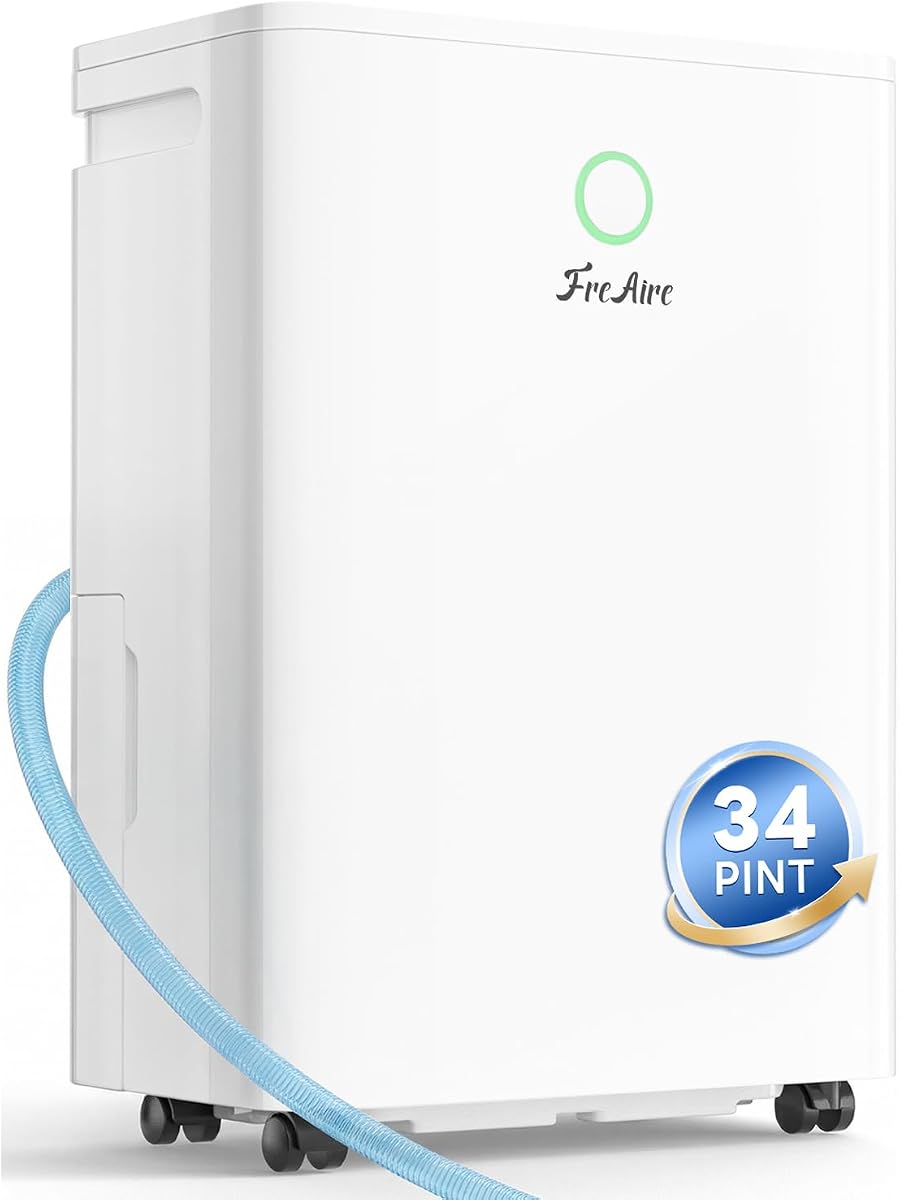
When shopping for a 34-pint dehumidifier, you're targeting spaces up to 2,500 square feet—typically a large basement, open floor plan, or a humid Florida home. The FreAire model you're evaluating comes with a 6.56-foot drain hose, a washable filter, and a compression system, which are key features to consider for continuous operation and low maintenance.
Key Considerations Before Buying
- Capacity vs. square footage: A 34-pint unit (under DOE 2019 standards) is ideal for very damp spaces up to 1,200 sq ft or moderately damp areas up to 2,500 sq ft. Exceeding these limits will force the unit to run constantly, reducing efficiency and lifespan.
- Drain hose vs. bucket: The included 6.56-foot drain hose is a huge convenience for continuous drainage, especially in basements without floor drains. If you plan to use the collection bucket, check its capacity (typically 50-70 pints) and the alarm that signals when it's full.
- Noise level: 'Quiet' is a relative term. Look for decibel ratings (dB) in the 40-50 dB range for bedroom use. The FreAire's compression system can be noisier than Peltier (thermoelectric) units, but it's also far more effective at removing moisture, so balance your need for silence against performance.
What Our Analysts Recommend
High-quality dehumidifiers should have a built-in humidistat with a clear readout and a 3-color indicator light (as on the FreAire) to show ambient humidity levels at a glance. Also, verify that the washable filter is easily accessible and that the unit has auto-defrost for operation in colder basements (below 65°F). Check the energy efficiency (ENERGY STAR rated) and the warranty—a longer warranty often signals better build quality.
Dehumidifiers Market Context
Market Overview
The dehumidifier market has grown significantly, driven by climate change increasing humidity levels and a rise in home moisture problems. Units now come with smart features like Wi-Fi connectivity and auto-restart, but the core is still the compressor and refrigerant system. The 30-50 pint range is the most popular for residential use, offering a balance of capacity and energy consumption.
Common Issues
Common complaints in this category include inaccurate humidity sensors, noisy operation, and bucket overflow or poor design. Another frequent issue is the unit freezing up in low temperatures, so look for a model with an auto-defrost function. Many users also report that the stated square footage coverage is optimistic, so it's wise to size up for very damp spaces.
Quality Indicators
Look for a compressor-based system (not thermoelectric) for serious moisture removal, a robust drain pump option, and a washable, reusable filter. Also, check for a digital display that shows both current humidity and a target setpoint—this is a sign of a more precise control system. A solid warranty (at least 1 year on parts and labor) and a reputable brand are also quality markers.
Review Authenticity Insights
Grade B Interpretation
The Grade B rating and an estimated 10% fake review percentage suggest that while the vast majority of the 40 reviews are genuine, a small fraction may be incentivized or artificially positive. This is not alarming, but it does warrant a careful read of the reviews to gauge consistent performance feedback.
Trust Recommendation
Given the high 5.0 overall rating (adjusted to 4.8 after filtering suspicious reviews), you can trust that the product delivers on its core promises. However, you should read the 1-3 star reviews (if any) to understand potential issues. Since all reviews are verified purchases, the feedback is likely from real users, so use their insights to decide if this unit fits your specific needs.
Tips for Reading Reviews
When reading reviews for dehumidifiers, focus on comments about actual moisture removal (e.g., 'how much water collected per day'), noise at different fan speeds, and reliability over time. Look for patterns—if multiple users mention the same issue (e.g., leaking, sensor error), it's a red flag. Also, note the context of the review (e.g., basement, bathroom) to see if it matches your intended use.
Expert Perspective
The FreAire 34-pint dehumidifier appears to be a solid performer, especially given its high user rating and the fact that most reviews are genuine. The inclusion of a 6.56-foot drain hose and a washable filter adds convenience and reduces maintenance costs. The compression system is a dependable technology, and the 3-color indicator light is a helpful feature for monitoring humidity levels at a glance. However, with a limited number of reviews (40), the long-term reliability is still somewhat unproven.
Purchase Considerations
Weigh the capacity against your specific space—if your basement is larger than 1,200 sq ft and very damp, you might need a 50-pint unit. Also, consider the noise level if you plan to use it in a bedroom or living area. The 10% fake review rate is low enough to trust the overall sentiment, but you should still cross-check with independent reviews on other platforms.
Comparing Alternatives
For a more informed decision, compare the FreAire with other 34-pint models from established brands like hOmeLabs or Frigidaire, paying attention to energy efficiency, noise ratings, and warranty terms.