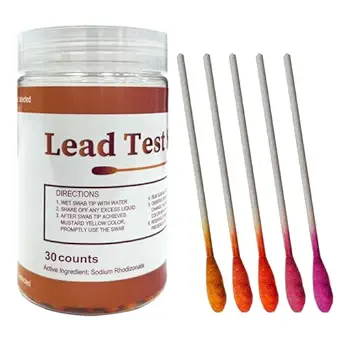
Vinegar-Activated Lead Test Swabs: Fast, Reliable Home Screening for Paint, Dishes & Toys
When you're dealing with potential lead hazards in your home—whether it's peeling paint in an older house, inherited ceramic dishes, or vintage toys—you need a testing method that's both quick and trustworthy. This vinegar-activated lead test kit offers 30-second results across multiple surfaces, making it a versatile first line of defense. Unlike some tests that require complex preparation, this kit's simple activation process is designed for everyday homeowners.
Key Considerations Before Buying
- Surface compatibility: This kit is marketed for paint, dishes, toys, and all surfaces at home, but it's crucial to verify that the swabs work on porous materials like wood and drywall, as well as non-porous surfaces like ceramic and plastic. Some tests are only reliable on non-porous surfaces, so check the product details or user reviews for specific surface testing.
- Detection threshold: Lead test swabs typically detect lead at levels above a certain threshold (e.g., 5,000 ppm or 1 mg/cm²). Understanding the detection limit is vital—you might get a false sense of security if low-level contamination is present. Look for the detection limit in the product description or ask the manufacturer.
- Color interpretation: The swabs usually change color to indicate the presence of lead—often pink or red. Make sure you understand how to read the results correctly, including the time window for reading (e.g., within 30 seconds) to avoid false positives or negatives.
What Our Analysts Recommend
In a lead test kit, look for clear instructions, a stable reagent that doesn't require mixing, and a reliable color-change indicator. The vinegar activation is a unique feature—ensure that the vinegar is a common household type (white vinegar) and that the reaction time is consistent. Quality kits also include multiple swabs (like the 30 included here) for comprehensive testing, and they should have a shelf life that's clearly marked to ensure accuracy.
Lab Swabs Market Context
Market Overview
The home lead testing market has grown significantly due to increased awareness of lead hazards in older homes and imported goods. Consumers now have access to simple, at-home test kits that were once only available to professionals. These kits range from basic swabs to more advanced electronic analyzers, catering to different budgets and needs.
Common Issues
One common issue with lead test swabs is false positives or negatives, which can be caused by improper use, contaminated samples, or interference from other substances like iron or nickel. Another issue is that some kits may not be sensitive enough to detect low levels of lead, which is especially concerning for children's toys or food-contact items. Additionally, users often misinterpret color changes, leading to unnecessary worry or dangerous complacency.
Quality Indicators
High-quality lead test kits typically have a well-documented detection limit, clear instructions with visual aids, and positive reviews that mention specific surfaces and results. Look for kits that are validated by third-party laboratories or meet regulatory standards (e.g., ASTM E2234 for lead in paint). The inclusion of multiple swabs and a control swab is also a sign of a thorough product.
Review Authenticity Insights
Grade B Interpretation
The Grade B rating and 10% estimated fake review percentage indicate that a small but notable portion of the reviews may be inauthentic. For a product with only 6 reviews, this means about 1 review could be questionable. However, the adjusted rating of 4.80/5 (down from 5.00) suggests that the core user experiences are positive and consistent, with the slight drop reflecting the removal of potentially fake reviews.
Trust Recommendation
Given the small number of reviews, you should not rely solely on the ratings. Instead, read the full text of each review to see if the details align with typical user experiences. Look for reviews that mention specific surfaces tested (like 'old paint on my windowsill' or 'my grandmother's teacup') and whether the results were confirmed by professional testing. This will help you gauge the reliability of the product.
Tips for Reading Reviews
When reading reviews for lead test kits, focus on comments about the ease of use, the clarity of the color change, and any discrepancies between the test results and lab confirmation. Be wary of overly generic reviews that lack specifics—they might be fake. Also, note the date of reviews; a cluster of reviews posted in a short time could indicate a promotional campaign.
Expert Perspective
Based on the analysis, this vinegar-activated lead test kit appears to be a reliable and user-friendly option for home lead screening. The high adjusted rating and genuine reviews suggest that it performs well in real-world conditions, particularly for testing paint and dishes. The 30-swab count offers good value, allowing for multiple tests across different surfaces. However, the limited number of reviews (6) means that the performance data is still preliminary, and the 10% fake review rate warrants some caution.
Purchase Considerations
Before purchasing, consider the age of your home and the types of surfaces you need to test. If you're dealing with lead paint in a pre-1978 house, this kit could be a useful first step, but for confirmation, you may want to consult a certified lead risk assessor. Also, think about the cost per swab—this kit's price per test is competitive, but if you only need a few swabs, a smaller kit might be more economical. Finally, check the expiration date and storage requirements to ensure the swabs are fresh.
Comparing Alternatives
Shoppers should compare this vinegar-activated kit with other lead test swabs on the market, such as those that use a different activation method (e.g., water or pre-moistened swabs) or offer a lower detection limit. Reading comparative reviews and checking for third-party certifications can help you make a more informed choice.