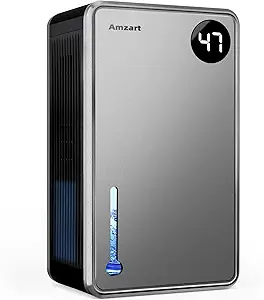
Small Dehumidifiers: Match Capacity to Your Space Before You Buy
This 98 oz (about 0.77 gallon) dehumidifier is marketed for spaces up to 1000 sq ft, but that coverage claim deserves scrutiny—compact units like this typically perform best in enclosed rooms of 100–300 sq ft. Before buying, understand how tank capacity, drainage options, and extraction rate determine whether it will actually solve your moisture problem.
Key Considerations Before Buying
- Tank capacity vs. extraction rate: A 98 oz tank sounds ample, but if the unit extracts 20–30 oz per day in humid conditions, you'll be emptying it daily unless you use the included drain hose. Continuous drainage via hose is essential for basements or RVs where you're away for extended periods.
- Noise level and sleep mode: The quiet operation and sleep mode are real advantages for bedrooms, but 'quiet' is relative—check the decibel rating (often 30–45 dB for small units) and read reviews from light sleepers to confirm it won't disrupt rest.
- Placement and airflow: These units need clearance around them and work best in closed rooms. A 1000 sq ft open-plan space will overwhelm a 98 oz dehumidifier; it's better suited to a single bedroom, bathroom, closet, or small basement area.
What Our Analysts Recommend
Prioritize models with auto shut-off to prevent overflow, a drain hose option for unattended use, and a built-in humidistat to cycle the unit efficiently. Also check for washable or replaceable filters—they affect long-term performance and air quality.
Dehumidifiers Market Context
Market Overview
The small dehumidifier market has exploded with low-cost imports, many boasting inflated coverage claims and inconsistent quality control. Consumers increasingly seek quiet, energy-efficient units for bedrooms and RVs, but the gap between marketing specs and real-world performance is wide.
Common Issues
Frequent complaints include units that stop extracting within months, inaccurate humidity sensors, and tanks that leak or are awkward to empty. Noise levels often exceed expectations, and some models develop rattles or fan issues over time.
Quality Indicators
Look for units with Peltier (thermoelectric) or small compressor systems from established brands, clear wattage specs, and a track record of responsive customer service. Reviews that mention long-term durability (6+ months) are more telling than initial impressions.
Review Authenticity Insights
Grade B Interpretation
A Grade B authenticity rating with an estimated 15% fake reviews means the 5.00/5 star average is likely inflated; the adjusted 4.60/5 is a more realistic indicator of satisfaction. This still suggests a generally well-liked product, but you should discount the perfect score.
Trust Recommendation
Trust the adjusted rating of 4.60/5 as a solid signal, but verify specific claims by reading reviews that mention your intended use case (e.g., basement, RV). Look for reviews with photos or detailed pros/cons rather than short praise.
Tips for Reading Reviews
Focus on reviews that describe the unit's performance in similar square footage and climate. Pay attention to mentions of tank emptying frequency, noise at night, and whether the drain hose works without leaking—these are common pain points for small dehumidifiers.
Expert Perspective
This 98 oz dehumidifier appears to be a competent compact unit for small, enclosed spaces, with useful features like a drain hose, auto shut-off, and sleep mode. The adjusted rating of 4.60/5 from 302 reviews suggests most buyers are satisfied, but the 15% fake review estimate means you should read critically. It's likely a good fit for a bedroom, bathroom, or small basement, but not a whole-home solution despite the 1000 sq ft claim.
Purchase Considerations
Weigh the unit's actual extraction capacity (often 1–2 pints per day for this size) against your moisture problem. If you need to dry a damp basement, you may need a larger compressor dehumidifier; for a closet or RV, this could be ideal. Also consider whether you'll use the drain hose—if not, daily tank emptying may become a chore.
Comparing Alternatives
Compare this model with similar-sized units from brands like Pro Breeze, hOmeLabs, and Vremi, paying attention to extraction rate, noise, and warranty terms.