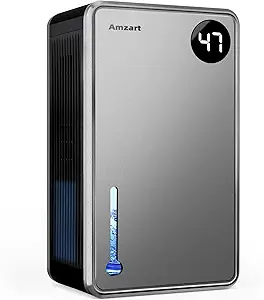
Small Dehumidifier Buying Guide: Capacity, Features, and Fit
This 98 oz (about 6.1 pints) small dehumidifier is designed for spaces up to 1000 sq ft, but real-world performance depends on humidity levels and air circulation. Unlike larger compressor models, it uses Peltier technology, which is quieter and more compact but less powerful in extreme conditions.
Key Considerations Before Buying
- Capacity and coverage: The 98 oz tank is generous for a small unit, but in high humidity (above 80%), you may need to empty it daily. The included drain hose allows continuous operation, which is essential for basements or RVs.
- Noise and sleep mode: Quiet operation is a key selling point. Sleep mode likely reduces fan speed and dims lights, but check user reports for actual decibel levels—some small dehumidifiers can still emit a high-pitched hum.
- Placement and airflow: For best results, place the unit in a central location with clear airflow. In a 1000 sq ft space, it may only effectively dehumidify a single room, so consider multiple units for whole-apartment coverage.
What Our Analysts Recommend
Look for auto shut-off to prevent overflow, a drain hose option for continuous use, and adjustable humidity settings. Also check if the unit has a defrost feature for cold environments, as Peltier dehumidifiers can frost up below 65°F.
Dehumidifiers Market Context
Market Overview
The small dehumidifier market is flooded with similar-looking Peltier models, often with inflated capacity claims. While they are affordable and quiet, they are best for mild humidity (50-70%) and small rooms. Compressor dehumidifiers are more effective in cold or very damp conditions but are heavier and noisier.
Common Issues
Common complaints include units that stop working after a few months, inaccurate humidity sensors, and misleading coverage claims. Peltier dehumidifiers also consume more energy per pint of water removed compared to compressor models, which can add to electricity costs.
Quality Indicators
A quality small dehumidifier should have a sturdy tank with a comfortable handle, a clearly labeled drain hose port, and a warranty of at least one year. Brands that offer responsive customer support and replacement parts are preferable.
Review Authenticity Insights
Grade B Interpretation
The B authenticity grade and 15% estimated fake reviews suggest that while most reviews are genuine, there is a notable minority of potentially incentivized or fake ones. This is common for newer products with high ratings, so the adjusted rating of 4.50 is more reliable than the raw 4.89.
Trust Recommendation
Trust the adjusted rating of 4.50 as a solid indicator of satisfaction, but be aware that 15% of reviews may be unreliable. Focus on reviews with detailed usage scenarios and photos, and discount generic five-star reviews without context.
Tips for Reading Reviews
When reading reviews, look for mentions of long-term performance (after 1-3 months), specific humidity conditions, and comparisons to other models. Pay attention to negative reviews that describe breakdowns or ineffective dehumidification, as these are often genuine.
Expert Perspective
This 98 oz small dehumidifier appears to be a decent option for mild humidity control in bedrooms, bathrooms, closets, or RVs, thanks to its quiet operation, sleep mode, and drain hose. However, its Peltier technology limits its effectiveness in very damp or cold environments. The adjusted rating of 4.50 from 18 reviews is promising but based on a small sample size.
Purchase Considerations
Consider this unit if you need a compact, quiet dehumidifier for a small, moderately humid space and prefer continuous drainage. If you're dealing with severe dampness (e.g., flooded basement) or temperatures below 65°F, a compressor dehumidifier would be more effective despite higher noise and weight.
Comparing Alternatives
Before buying, compare with other small dehumidifiers that offer similar features but have larger review counts and higher authenticity grades. Also check energy consumption and warranty terms.