
AI Smart Glasses Buying Guide: Camera Specs, Lenses, and Fit
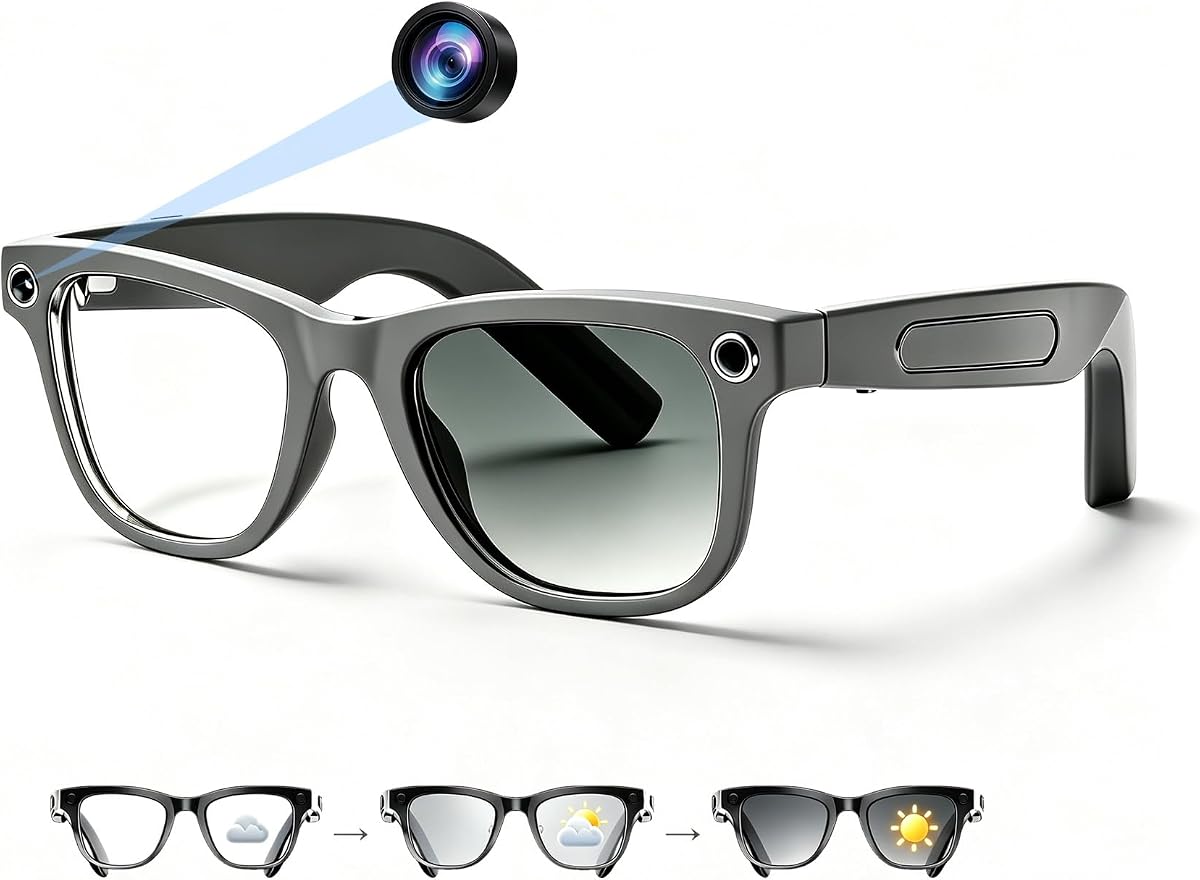
AI smart glasses with built-in cameras, like this 4K photo and 1080P video model with photochromic gray lenses, blend wearable tech with everyday eyewear. Before buying, focus on camera performance, lens adaptability, and comfort for all-day wear.
Key Considerations Before Buying
- Camera resolution and stabilization: 4K photos and 1080P video are solid, but check for electronic image stabilization (EIS) to avoid shaky footage during walks or commutes.
- Photochromic lens quality: These lenses darken in sunlight and clear indoors; ensure they offer 100% UVA/UVB protection and transition quickly to avoid lag in changing light.
- Battery life and charging: Smart glasses often last 4-6 hours with mixed use; look for USB-C fast charging and a low-battery indicator to avoid surprises.
What Our Analysts Recommend
Prioritize models with scratch-resistant lens coatings, a secure but lightweight frame (under 50g), and intuitive touch controls. Check if the glasses support Wi-Fi transfer or require a companion app for file management, as this affects ease of use.
Glasses Market Context
Market Overview
The smart glasses market is growing rapidly, with AI integration enabling hands-free photography, voice assistance, and augmented reality. However, many products are first-generation, balancing functionality with style and battery life.
Common Issues
Common complaints include bulky designs, short battery life, and privacy concerns due to always-on cameras. Some users also report connectivity issues with smartphones or limited app compatibility.
Quality Indicators
High-quality smart glasses typically feature reputable lens brands (e.g., Zeiss), robust build materials like TR-90, and clear transparency about data privacy. Strong customer support and firmware updates are also positive signs.
Review Authenticity Insights
Grade B Interpretation
A Grade B authenticity rating with 15% estimated fake reviews means most reviews are genuine, but some may be incentivized or exaggerated. The adjusted rating of 4.40/5 (down from 4.80) suggests real customer satisfaction remains high, though slightly less perfect than initially appears.
Trust Recommendation
Trust the adjusted rating as a more reliable indicator of true performance. Look for reviews with specific details about camera quality, battery life, and comfort, as these are harder to fake and more helpful for your decision.
Tips for Reading Reviews
When reading reviews for smart glasses, focus on those that mention real-world usage scenarios like outdoor photography or indoor transitions. Be wary of generic praise without specifics, and check if reviewers have a history of balanced feedback.
Expert Perspective
These AI smart glasses offer impressive camera specs (4K photos, 1080P video) and photochromic lenses, making them versatile for daily wear. The high adjusted rating of 4.40/5 indicates most users are satisfied, though the 15% fake review estimate suggests some caution. At this price point, they compete well with other camera-enabled smart glasses, but battery life and app ecosystem are key differentiators.
Purchase Considerations
Weigh the convenience of hands-free capture against potential privacy concerns and battery limitations. If you need all-day wear, consider a model with a larger battery or swappable frames. Also, verify compatibility with your smartphone's OS and preferred apps.
Comparing Alternatives
Compare with similar smart glasses from brands like Ray-Ban or Amazon Echo Frames, which may offer different features like open-ear audio or voice assistant integration.


