
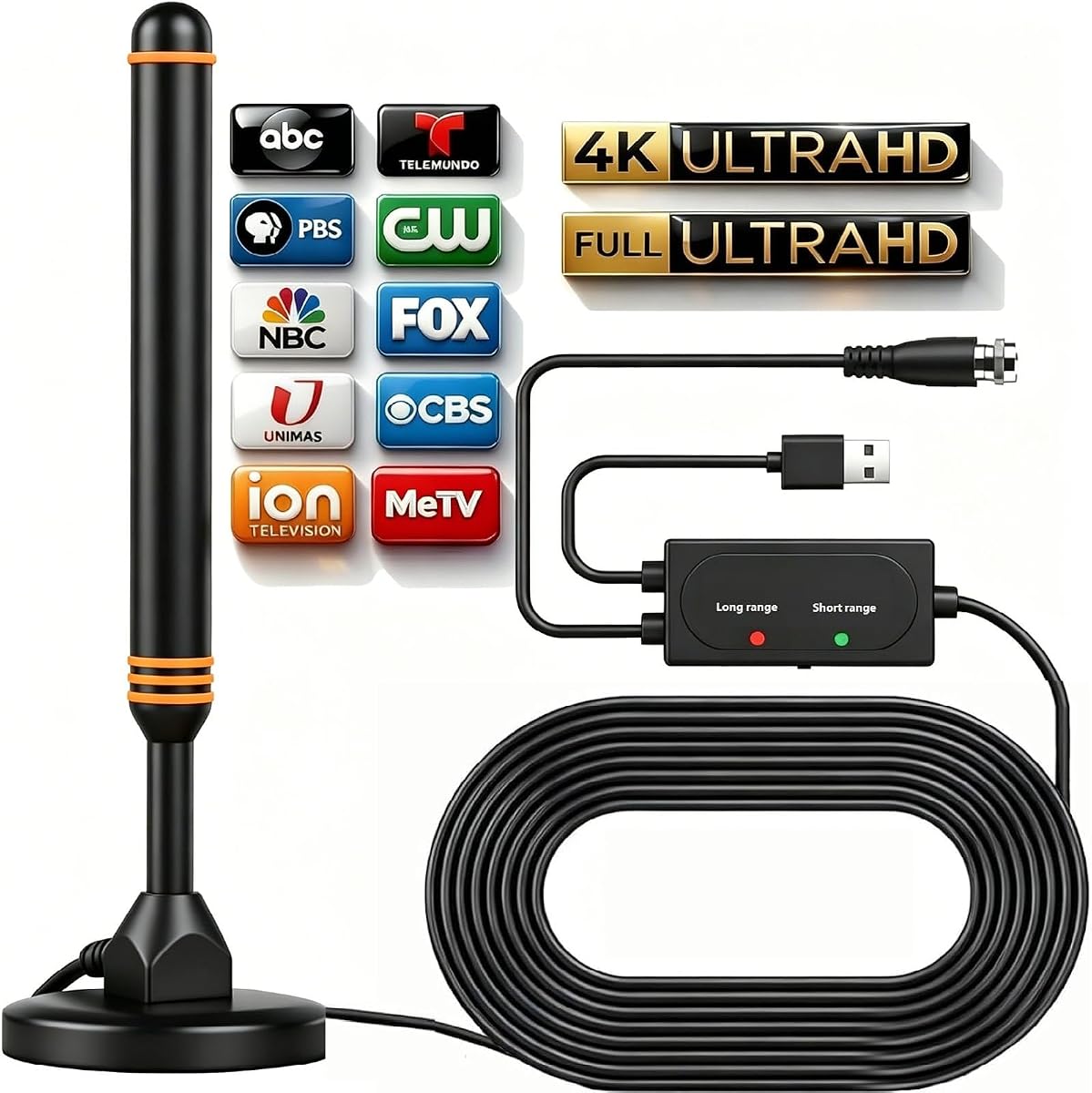
Indoor TV Antennas: Cut the Cord Without Losing Local Channels
This indoor digital TV antenna is designed to pull free local broadcasts from networks like ABC, CBS, and NBC without a cable subscription. With a 4.33-star rating from over 16,000 Amazon reviewers, it's clearly a popular option, but the adjusted rating of 3.90 suggests you should look beyond the headline score.
Key Considerations Before Buying
- Reception depends heavily on your distance from broadcast towers and local terrain. Check sites like AntennaWeb or RabbitEars to see which channels are available in your area before buying.
- Indoor antennas are sensitive to placement—near windows, high up, and away from metal objects and electronics. Expect to experiment with different spots to find the sweet spot for your home.
- This antenna is likely a flat or amplified model, which can help with VHF and UHF signals, but it won't overcome extreme distances or obstructions. If you're more than 30-40 miles from towers, an outdoor or attic antenna may be necessary.
What Our Analysts Recommend
Look for an antenna with a detachable amplifier so you can test with and without it, as amplification can sometimes overload weak signals. Also check the connector type (usually coaxial) and cable length to ensure it reaches your TV. A good return policy is crucial because reception varies by location.
TV Antennas Market Context
Market Overview
The TV antenna market has surged as more households cut the cord, with indoor antennas being the most accessible entry point. However, performance is highly variable, and many products overpromise on range and channel count. This category is crowded with similar-looking models, making it hard to distinguish quality.
Common Issues
A frequent complaint is that antennas don't deliver the advertised range or number of channels, especially in rural or hilly areas. Another issue is signal dropouts during bad weather or interference from other electronics. Some users also find that the included amplifier adds noise rather than improving reception.
Quality Indicators
Quality antennas often use better materials like copper or silver elements and have thoughtful designs for mounting. Look for brands with clear specifications, such as gain (dB) and frequency range (VHF/UHF), and a history of positive reviews that mention specific channel reception. Avoid generic listings with vague claims and no technical details.
Review Authenticity Insights
Grade C Interpretation
A Grade C authenticity rating with an estimated 22% fake reviews means that while many reviews are genuine, a significant portion may be incentivized or fabricated. This inflates the overall rating, so the adjusted 3.90 is a more reliable indicator of actual customer satisfaction. The presence of detailed, personal experiences in reviews suggests some authenticity, but caution is warranted.
Trust Recommendation
Focus on reviews that include specifics like location, channel reception, and setup challenges, as these are harder to fake. Verified purchase badges help, but also check the reviewer's history for patterns of suspicious activity. Consider the adjusted rating as your baseline, and don't be swayed by the higher headline score.
Tips for Reading Reviews
Look for reviews that mention both successes and failures, as they tend to be more balanced. Pay attention to comments about customer service and return experiences, which can indicate a reliable seller. Sort by most recent to get a current picture, as performance can change with broadcast tower updates or product revisions.
Expert Perspective
This indoor TV antenna appears to be a mid-tier option with a solid but not exceptional adjusted rating of 3.90. The high number of reviews provides a wealth of data, but the 22% fake review estimate means you should weigh the adjusted score more heavily. It's likely a decent choice for urban or suburban users close to towers, but may disappoint those in fringe areas.
Purchase Considerations
Before buying, verify your distance to local broadcast towers and check if you need VHF, UHF, or both. Consider whether you need an amplified antenna, and if so, whether the amplifier is removable. Also factor in the return policy, as antenna performance is highly location-dependent and you may need to try a few models.
Comparing Alternatives
Compare this antenna with other top-rated indoor models from brands like Antennas Direct, Channel Master, or Mohu, which often have more transparent specifications and consistent performance.


