
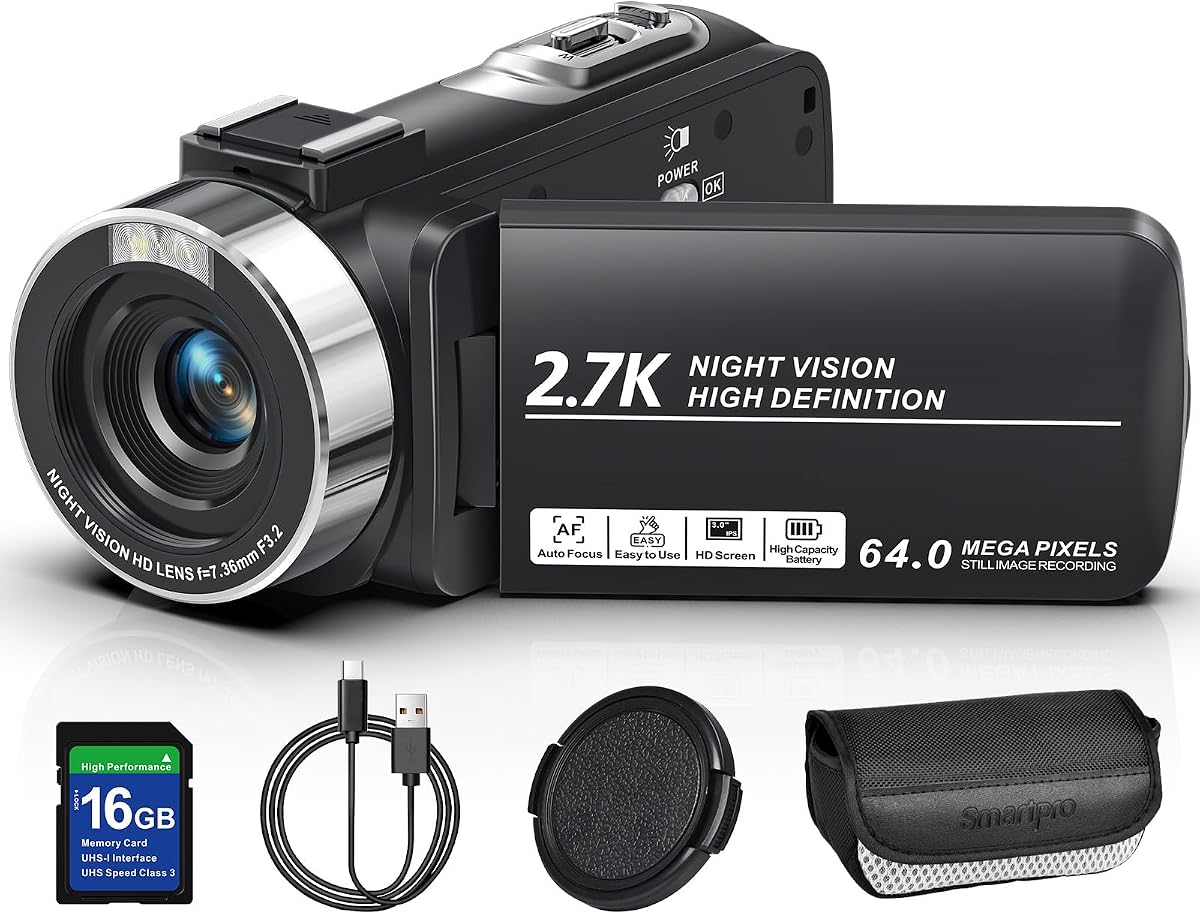
2.7K Camcorder Buying Guide: What to Know Before You Buy
This 2.7K 64MP camcorder targets budget-conscious vloggers and casual videographers who want 4K-adjacent resolution, night vision, and YouTube-ready features without spending $500+. Before buying, understand how its specs translate to real-world performance and where budget camcorders typically cut corners.
Key Considerations Before Buying
- Resolution claims can be misleading: 64MP is likely the still-photo interpolation (not true optical), while 2.7K video is a step below 4K. Confirm whether 2.7K is native or upscaled, as upscaling reduces sharpness and detail.
- IR night vision is a niche feature that works best in complete darkness at short range. It's useful for security-style recording or nocturnal wildlife, but footage will be monochrome and grainy, so don't expect daytime quality.
- YouTube vlogging demands reliable audio and stabilization. Check if the camcorder has an external mic jack and whether image stabilization is optical or digital—digital stabilization often crops the frame and can introduce jitter.
What Our Analysts Recommend
Prioritize sensor size and lens aperture over megapixel counts; a larger sensor with a modest megapixel rating typically outperforms a tiny sensor with inflated resolution. Look for manual control options (focus, exposure) and a flip screen for vlogging. Build quality and battery life are also telling—cheap plastic bodies and short runtime signal a disposable device.
Camcorders Market Context
Market Overview
The budget camcorder market is flooded with no-name brands boasting inflated specs like '64MP' and '2.7K' to stand out. Many are manufactured in the same factories and differ only in firmware and branding. Meanwhile, smartphones have made dedicated camcorders less essential for casual users, so these devices must offer unique features (night vision, long zoom) to justify purchase.
Common Issues
Common complaints include poor low-light performance, ineffective stabilization, and misleading resolution claims. Battery life is often overstated, and included accessories (microphones, lights) are frequently low quality. Customer support and warranty service can be nonexistent for unknown brands.
Quality Indicators
A reputable budget camcorder will specify sensor type (CMOS), optical zoom (not just digital), and actual video resolution without interpolation tricks. Look for honest customer reviews that mention real-world battery life and low-light footage. A 1-year warranty and responsive seller are positive signs.
Review Authenticity Insights
Grade B Interpretation
A Grade B authenticity rating means most reviews are genuine, but about 15% show signs of potential fakery—likely incentivized or bot-generated. The adjusted rating of 4.60/5 (down from 5.00) suggests that after removing suspicious reviews, the product still satisfies most buyers, but the perfect score is inflated.
Trust Recommendation
Trust the adjusted 4.60 rating more than the perfect 5.00. Focus on reviews with photos/videos and detailed pros/cons. Be skeptical of reviews that only praise without specifics or use repetitive language.
Tips for Reading Reviews
For camcorders, prioritize reviews that discuss video quality in different lighting, battery performance, and ease of use. Look for mentions of customer service experiences. Sort by 'most recent' to catch any declining quality or firmware issues.
Expert Perspective
This camcorder appears to be a solid entry-level option for hobbyists who need night vision and don't require 4K. The high adjusted rating indicates most buyers are satisfied, but the 15% fake review percentage means you should verify claims independently. At this price point, expect compromises in low-light performance and stabilization.
Purchase Considerations
Weigh the importance of night vision and 2.7K against the lack of 4K and potentially mediocre stabilization. If you mainly shoot in daylight and want simplicity, this could work; if you need professional-quality video, save for a better model.
Comparing Alternatives
Compare with similar-priced camcorders from brands like Canon or Sony (entry-level) or even smartphone gimbals, which may offer better stabilization and app integration.


