
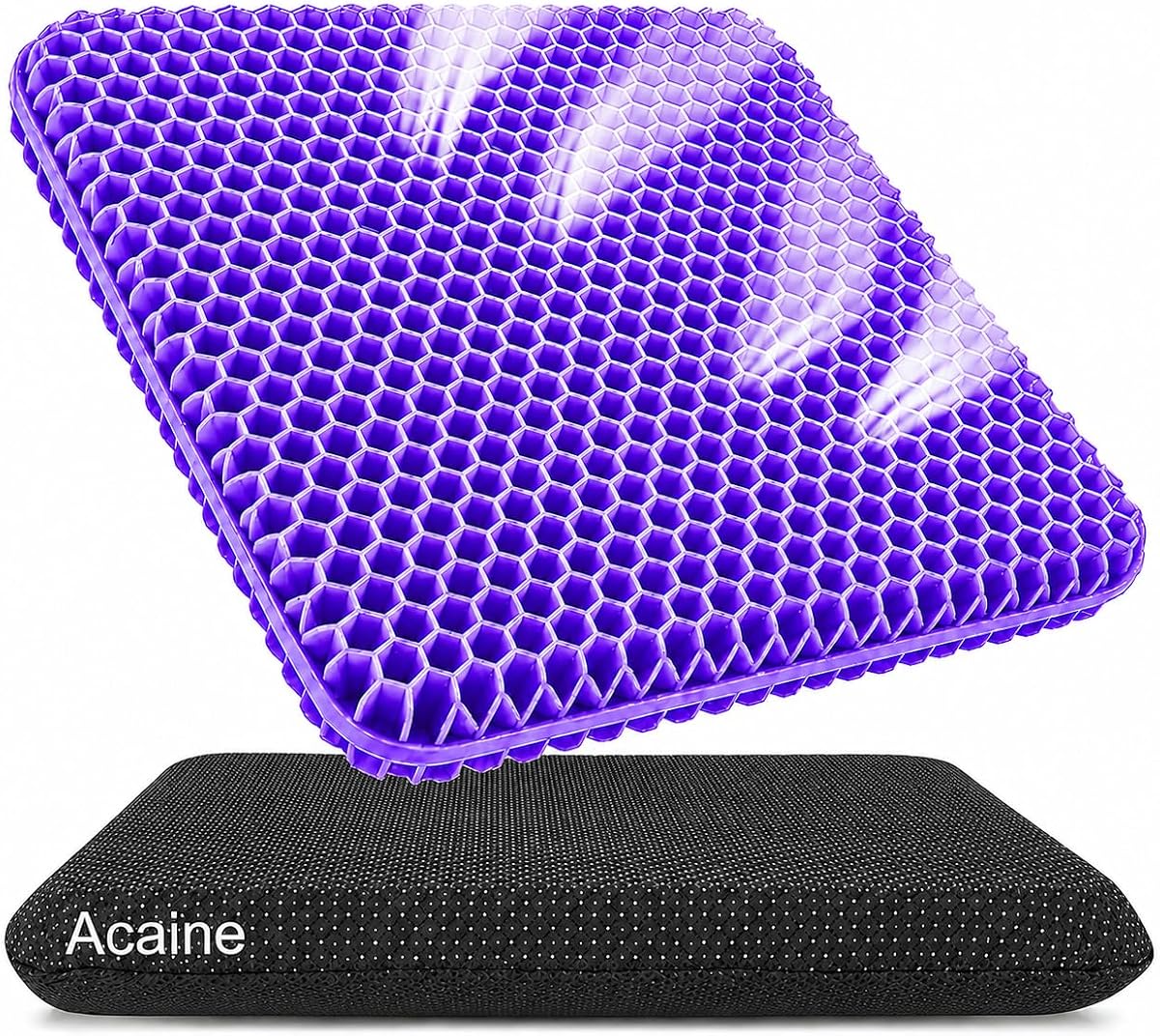
Choosing a Gel Seat Cushion for Tailbone and Sciatica Relief
This extra-thick pure gel cushion is designed for long sitting, targeting back, sciatica, tailbone, and hip pain. Unlike generic foam cushions, its large size and breathable gel construction aim to provide sustained support and cooling for office chairs, cars, and wheelchairs.
Key Considerations Before Buying
- Gel density and thickness: A pure gel core that is extra thick (typically 1.5–2 inches) disperses pressure better than thin gel pads or memory foam, but too much thickness can raise your seating height and affect ergonomics.
- Breathability and cooling: Gel naturally dissipates heat, but some covers trap moisture. Look for a washable, breathable cover with ventilation holes or mesh to prevent sweating during extended use.
- Size and fit: Large dimensions (e.g., 18x16 inches) suit most office chairs and car seats, but measure your seat first. A cushion that’s too large may overhang and reduce stability, while too small won’t cover the tailbone area.
What Our Analysts Recommend
Prioritize medical-grade gel that maintains shape without bottoming out, a non-slip base, and a cover that is removable and machine washable. Check for certifications like CertiPUR-US for foam or gel safety, and ensure the cushion has a return policy if it doesn’t relieve pain.
Back & Seat Cushions Market Context
Market Overview
The seat cushion market is flooded with memory foam, gel-infused, and pure gel options, with prices ranging from $20 to over $100. Pure gel cushions are a niche segment, often marketed for medical relief, but quality varies widely; many cheap versions use low-density gel that flattens quickly.
Common Issues
Common complaints include insufficient thickness, gel that hardens in cold temperatures, covers that tear or aren’t washable, and cushions that slide on smooth surfaces. Some users find gel too firm or too soft, so personal preference matters.
Quality Indicators
High-quality gel cushions use a single molded piece of gel (not beads or layers) that returns to shape, have a durable zippered cover, and include a non-slip bottom. Certifications like ISO 9001 or medical device listings add credibility, though most are general consumer products.
Review Authenticity Insights
Grade B Interpretation
A Grade B authenticity rating with an estimated 12% fake reviews means most reviews are likely genuine, but a small portion may be incentivized or exaggerated. This is typical for niche health products, where positive reviews can be influenced by free samples or discounts.
Trust Recommendation
Trust the adjusted rating of 4.20/5, which excludes suspicious reviews, as a more reliable indicator. Still, read recent reviews with photos and detailed use cases (e.g., 'used 8 hours a day for sciatica') to gauge real-world performance.
Tips for Reading Reviews
Focus on reviews that mention specific conditions (tailbone pain, post-surgery) and duration of use. Be wary of generic praise ('comfortable!') or reviews that only discuss shipping. Look for balanced comments about firmness and heat retention.
Expert Perspective
This cushion appears to be a solid option for those needing extra thickness and gel cooling, with a 4.44/5 rating from 38 reviews. However, the adjusted 4.20/5 suggests some inflated expectations. The pure gel design is promising for pressure relief, but the lack of description details (e.g., exact dimensions, gel density) makes it hard to assess durability.
Purchase Considerations
Weigh the need for portability and washability against the potential bulkiness. If you have significant tailbone pain, a thicker gel cushion may help, but consider if you need a cutout (coccyx relief) which this may lack. Also, check if the cover is truly breathable for long sitting.
Comparing Alternatives
Compare with memory foam or hybrid cushions that offer similar relief at lower prices, and read return policies in case the firmness doesn’t suit you.


