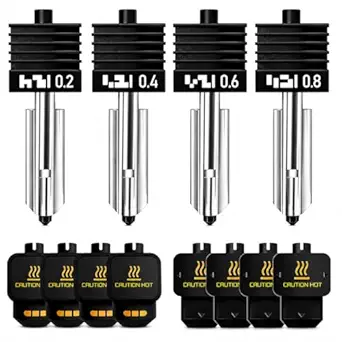
Bambu Lab P2S Hotend: 5 Key Buying Factors Before You Upgrade
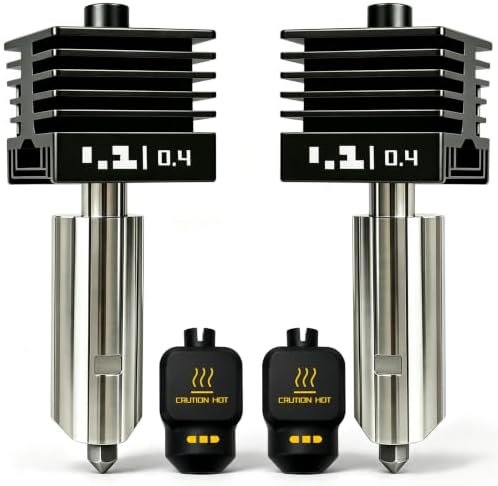
When upgrading the hotend on your Bambu Lab P2S, X2D, H2D, H2S, A1, or A1 Mini, the 0.4mm hardened steel nozzle with a 350°C rating and 600mm/s speed capability stands out. But choosing the right hotend involves more than just matching the model number—it's about print quality, reliability, and maintenance ease.
Key Considerations Before Buying
- Compatibility: Verify the hotend is explicitly designed for your printer model. The P2S hotend in this listing claims compatibility with X2D/H2D/H2S/A1/A1 Mini, but confirm your specific model and firmware version to avoid installation issues.
- Nozzle size and material: A 0.4mm hardened steel nozzle is a versatile choice for most prints, but consider your typical filament. Hardened steel resists wear from abrasive filaments like carbon fiber or glow-in-the-dark, but it may require slightly higher temperatures for the same flow rate compared to brass.
- Maintenance and clog resistance: Look for a clog-free design—features like a polished internal bore and a well-sealed heat break reduce jams. Quick-swap capability is a huge time-saver, especially if you frequently change nozzles for different materials.
What Our Analysts Recommend
In a quality hotend, inspect the machining of the nozzle tip and the heat break. A leak-proof design is critical—look for precise threading and a proper seal between the heat break and the nozzle. Also, check the thermal conductivity of the heat sink; efficient heat dissipation prevents heat creep and ensures consistent extrusion at high speeds.
3D Printer Extruders Market Context
Market Overview
The 3D printer extruder market is rapidly evolving, with a focus on high-speed printing (600mm/s and beyond) and high-temperature materials (350°C). Bambu Lab's ecosystem has popularized integrated hotend assemblies that are easy to swap, and third-party replacements like this one offer cost savings and performance claims that rival OEM parts.
Common Issues
Common issues in this category include nozzle clogging due to poor internal geometry or low-quality steel, heat creep causing jams, and leaks at the heat break junction. Many users also report inconsistent extrusion at high speeds if the hotend's thermal management is inadequate.
Quality Indicators
Quality indicators include a mirror-polished nozzle bore for smooth filament flow, a hardened steel tip that's tested for high-temperature resistance, and a heat break with a smooth, low-friction surface. Look for certifications or test results that validate the 350°C rating and the 600mm/s speed claim.
Review Authenticity Insights
Grade B Interpretation
The Grade B rating with an estimated 10% fake review rate is typical for a product with this many reviews—it's not alarming, but it means you should be slightly cautious. The 4.44/5 overall rating drops to 4.20/5 when suspicious reviews are filtered, suggesting a solid but not exceptional product.
Trust Recommendation
Given the moderate fake review percentage, rely on detailed, verified purchase reviews—especially those that mention long-term use or specific print settings. Look for patterns in complaints about clogging or leaking; if multiple genuine reviews mention the same issue, it's likely real.
Tips for Reading Reviews
For this product type, focus on reviews that include photos of the installed hotend or describe the installation process. Also, pay attention to reviews from users who print with abrasive filaments—they'll stress-test the wear resistance more than typical PLA users.
Expert Perspective
This 2-pack hotend offers a compelling value proposition for Bambu Lab owners, especially those who print with abrasives or need a spare. The 350°C rating and hardened steel tip are genuinely useful for advanced materials, and the quick-swap design aligns with Bambu's user-friendly philosophy. However, the 10% fake review rate and the slight drop in adjusted rating remind us that performance may not perfectly match the marketing hype. The fact that a 3D printer technician with a 40-printer farm vouches for it in a review is a strong positive signal.
Purchase Considerations
Weigh the cost of this 2-pack against buying a single OEM hotend. The savings are attractive, but ensure the quality is consistent—a leaky or clog-prone hotend can waste more time and filament than you save. If you primarily print PLA and PETG, you might not need the high-temperature capability, but the wear resistance is still a bonus.
Comparing Alternatives
Compare this with Bambu Lab's official hotends and other third-party options from brands like Micro Swiss or E3D. Look for user experiences that specifically compare the aftermarket hotend to the OEM one in terms of print quality and reliability.