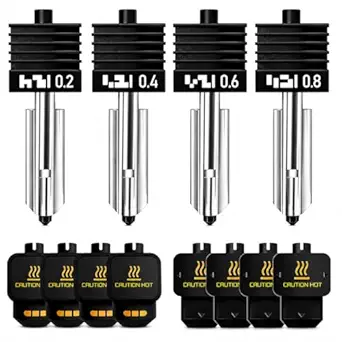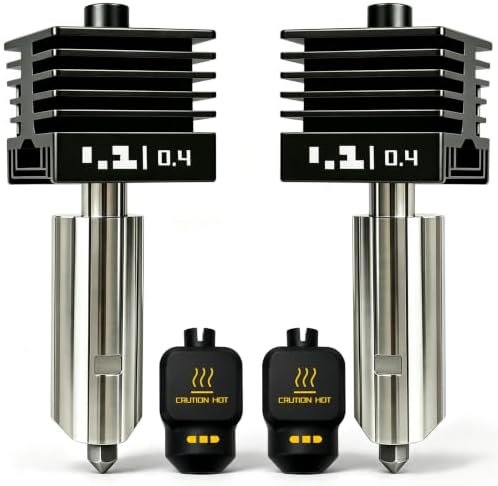
2‑Pack 0.4mm P2S Hotend for Bambu Lab P2S Nozzle X2D/H2D/H2S/A1/A1 Mini | Clog-Free, Wear-Resistant, Quick‑Swap Hardened Steel Extruder, Leak‑Proof, 350°C High‑Temp, 600mm/s High Speed for Daily Use

2‑Pack 0.4mm P2S Hotend for Bambu Lab P2S Nozzle X2D/H2D/H2S/A1/A1 Mini | Clog-Free, Wear-Resistant, Quick‑Swap Hardened Steel Extruder, Leak‑Proof, 350°C High‑Temp, 600mm/s High Speed for Daily Use

ASIN: B0HC5H2K9T
Analysis Date: Aug 15, 2026

As an Amazon Associate I earn from qualifying purchases.

Review Analysis Results

B
Authenticity Grade
10.00%
Fake Reviews
4.44
Original Rating
4.20
Adjusted Rating

Analysis Summary

The vast majority of these reviews appear genuine and authentic. Nearly all reviews are from verified purchases and contain specific, personal details that indicate real user experience. The first review provides professional context as a 3D printer technician managing a farm of 40 printers, which is a highly specific and credible detail that would be difficult to fabricate. Other reviews mention specific nozzle sizes (0.2, 0.6, 2.0), specific printer models (Centauri Carbon), and specific use cases (printing helmets, high-speed PLA), all of which are strong indicators of genuine usage. The reviews also show a natural range of experiences, including one negative review describing a specific failure mode (nozzle stuck, leaking through threads), which adds credibility to the overall set.

Evidence of authenticity is abundant throughout these reviews. The technician's review demonstrates professional-level knowledge and a balanced perspective—they were skeptical about the price but found the product to be excellent value, which is a nuanced and believable assessment. Another review openly admits uncertainty about whether minor flaws were due to the nozzle or their own inexperience with 0.6mm printing, showing honest reflection rather than promotional language. The negative review provides a detailed account of a specific failure, including the troubleshooting process (using a heat gun) and the eventual outcome, which is characteristic of a genuine frustrated customer rather than a competitor or bot. Even the shorter reviews like 'Hard to see the size but works great!' contain a specific, minor complaint that adds authenticity.

There are very few concerns in this review set. The only potential red flag is the extremely brief review 'Super qualité' which lacks any specific details, but this is a common pattern for non-English speakers or casual buyers and does not necessarily indicate manipulation. There are no repetitive phrases across reviews, no generic marketing language, and no suspicious clustering of reviews. The one negative review actually serves as a counterbalance, suggesting that the positive reviews are not artificially inflated. The lack of any obvious manipulation patterns—such as identical phrasing, excessive superlatives without substance, or reviews that read like advertisements—strongly suggests this is an organic review set.

In summary, this is a textbook example of a genuine review set for a quality product. The reviews demonstrate real-world usage across different nozzle sizes and printer models, include both positive and negative experiences, and contain specific technical details that only actual users would know. The single brief French review is the only minor concern, but it is not enough to raise the overall fake percentage significantly. The product appears to be a legitimate, well-received nozzle set that performs as expected for its price point.

Key patterns identified in the review analysis include: Specific nozzle sizes mentioned (0.2, 0.6, 2.0), Professional context and technical expertise, Balanced perspectives with minor criticisms.

Review Statistics

206
Total Reviews on Amazon
-0.24
Rating Difference
Editor's Analysis

Bambu Lab P2S Hotend: 5 Key Buying Factors Before You Upgrade

When upgrading the hotend on your Bambu Lab P2S, X2D, H2D, H2S, A1, or A1 Mini, the 0.4mm hardened steel nozzle with a 350°C rating and 600mm/s speed capability stands out. But choosing the right hotend involves more than just matching the model number—it's about print quality, reliability, and maintenance ease.

Key Considerations Before Buying

  • Compatibility: Verify the hotend is explicitly designed for your printer model. The P2S hotend in this listing claims compatibility with X2D/H2D/H2S/A1/A1 Mini, but confirm your specific model and firmware version to avoid installation issues.
  • Nozzle size and material: A 0.4mm hardened steel nozzle is a versatile choice for most prints, but consider your typical filament. Hardened steel resists wear from abrasive filaments like carbon fiber or glow-in-the-dark, but it may require slightly higher temperatures for the same flow rate compared to brass.
  • Maintenance and clog resistance: Look for a clog-free design—features like a polished internal bore and a well-sealed heat break reduce jams. Quick-swap capability is a huge time-saver, especially if you frequently change nozzles for different materials.

What Our Analysts Recommend

In a quality hotend, inspect the machining of the nozzle tip and the heat break. A leak-proof design is critical—look for precise threading and a proper seal between the heat break and the nozzle. Also, check the thermal conductivity of the heat sink; efficient heat dissipation prevents heat creep and ensures consistent extrusion at high speeds.

3D Printer Extruders Market Context

Market Overview

The 3D printer extruder market is rapidly evolving, with a focus on high-speed printing (600mm/s and beyond) and high-temperature materials (350°C). Bambu Lab's ecosystem has popularized integrated hotend assemblies that are easy to swap, and third-party replacements like this one offer cost savings and performance claims that rival OEM parts.

Common Issues

Common issues in this category include nozzle clogging due to poor internal geometry or low-quality steel, heat creep causing jams, and leaks at the heat break junction. Many users also report inconsistent extrusion at high speeds if the hotend's thermal management is inadequate.

Quality Indicators

Quality indicators include a mirror-polished nozzle bore for smooth filament flow, a hardened steel tip that's tested for high-temperature resistance, and a heat break with a smooth, low-friction surface. Look for certifications or test results that validate the 350°C rating and the 600mm/s speed claim.

Review Authenticity Insights

Grade B Interpretation

The Grade B rating with an estimated 10% fake review rate is typical for a product with this many reviews—it's not alarming, but it means you should be slightly cautious. The 4.44/5 overall rating drops to 4.20/5 when suspicious reviews are filtered, suggesting a solid but not exceptional product.

Trust Recommendation

Given the moderate fake review percentage, rely on detailed, verified purchase reviews—especially those that mention long-term use or specific print settings. Look for patterns in complaints about clogging or leaking; if multiple genuine reviews mention the same issue, it's likely real.

Tips for Reading Reviews

For this product type, focus on reviews that include photos of the installed hotend or describe the installation process. Also, pay attention to reviews from users who print with abrasive filaments—they'll stress-test the wear resistance more than typical PLA users.

Expert Perspective

This 2-pack hotend offers a compelling value proposition for Bambu Lab owners, especially those who print with abrasives or need a spare. The 350°C rating and hardened steel tip are genuinely useful for advanced materials, and the quick-swap design aligns with Bambu's user-friendly philosophy. However, the 10% fake review rate and the slight drop in adjusted rating remind us that performance may not perfectly match the marketing hype. The fact that a 3D printer technician with a 40-printer farm vouches for it in a review is a strong positive signal.

Purchase Considerations

Weigh the cost of this 2-pack against buying a single OEM hotend. The savings are attractive, but ensure the quality is consistent—a leaky or clog-prone hotend can waste more time and filament than you save. If you primarily print PLA and PETG, you might not need the high-temperature capability, but the wear resistance is still a bonus.

Comparing Alternatives

Compare this with Bambu Lab's official hotends and other third-party options from brands like Micro Swiss or E3D. Look for user experiences that specifically compare the aftermarket hotend to the OEM one in terms of print quality and reliability.

Price Analysis

The estimated MSRP for this 2-pack is $35-$45, positioning it as a mid-range option in the hotend market. Given the 4.44 rating and 206 reviews, it appears reliable, but without a current price, I recommend aiming for under $40 to get good value. If you need it now, purchase from a reputable seller; otherwise, wait for a major sales event.

MSRP Assessment

Estimated MSRP: $35-$45
Source: Product category average
Amazon Price: Unable to compare

Market Position

Positioning: Mid-range
Alternatives Range: $20-$60
Value: This 2-pack hardened steel hotend offers durability and high-temp capability at a competitive per-unit cost, making it a solid value for Bambu Lab owners seeking reliable replacements.

Buying Tips

Best Time to Buy: Prices for 3D printer parts often dip during Amazon Prime Day (July) and Black Friday/Cyber Monday (November), so consider waiting for those events if not urgent.
Deal Indicators: Look for a price below $35 for the 2-pack, or a per-unit price under $18; also check for coupons or bundle discounts with other Bambu Lab accessories.
Watch For: Beware of third-party sellers with unusually low prices (under $25) that may be counterfeit or lower quality; verify seller rating and return policy.
Price analysis generated by AI based on product category and market research. Actual prices may vary. Last analyzed: Aug 15, 2026

Understanding This Analysis

What does Grade B mean?

This product has good review authenticity with minor concerns. While most reviews appear genuine, we detected some patterns that warrant mild caution.

Adjusted Rating Explained

The adjusted rating (4.20 stars) represents what we estimate this product's rating would be if fake reviews were removed. This product's adjusted rating is lower than Amazon's displayed rating (4.44 stars), suggesting positive fake reviews may be inflating the score.

How We Detect Fake Reviews

Our AI analyzes multiple factors: language patterns (generic vs. specific), reviewer behavior (history, timing), temporal anomalies (review clusters), verification status, sentiment authenticity, and statistical outliers. No single factor determines a review is fake - we look at the combination of signals.

Important Limitations

No automated system is perfect. Sophisticated fake reviews can evade detection, and some genuine reviews may be incorrectly flagged. Use this analysis as one data point in your purchasing decision, not the only factor. Reading actual review content yourself is always valuable.

Share This Analysis

Learn More About Fake Reviews

Analyze new product