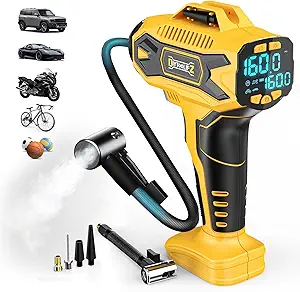
Portable Tire Inflators: What 150 PSI Really Means for You
A portable tire inflator like this 150 PSI model with LCD display and 3X faster inflation can be a lifesaver on the road, but understanding its capabilities and limitations is key. This guide covers what to consider when choosing a portable air compressor for cars, motorcycles, bicycles, and more.
Key Considerations Before Buying
- Maximum pressure (150 PSI) determines what you can inflate. While 150 PSI is sufficient for most car tires (typically 30-35 PSI), motorcycle tires (28-40 PSI), and bicycle tires (up to 120 PSI), it may struggle with high-pressure road bike tires or large truck tires. Check your tire's recommended PSI before purchasing.
- Power source and runtime are critical. Corded models require a 12V DC outlet, while cordless models offer portability but limited runtime. Consider how you'll use it: occasional top-offs vs. emergency roadside assistance. This model's 3X faster claim suggests a high-performance motor, but verify actual inflation times in reviews.
- Build quality and durability matter for a tool that may sit unused for months. Look for heat-resistant materials, a sturdy hose connection, and a reliable pressure gauge. The LCD digital display adds convenience but can be less durable than analog gauges in extreme temperatures.
What Our Analysts Recommend
Prioritize accurate pressure readings (within 1-2 PSI), auto shut-off to prevent over-inflation, and a built-in flashlight for nighttime use. A carrying case and multiple nozzle adapters are also valuable for versatility. Check that the power cord is long enough to reach all four tires without an extension.
Air Compressors & Inflators Market Context
Market Overview
The portable tire inflator market has grown with the rise of compact, high-powered lithium-ion batteries and digital pressure sensors. Consumers now expect features like auto shut-off, digital displays, and fast inflation times, with prices ranging from $30 to $100. Brands like AstroAI, EPAuto, and VacLife dominate, but many generic models offer similar specs at lower prices.
Common Issues
Common complaints include inaccurate pressure gauges (reading 2-5 PSI off), slow inflation times (especially for larger tires), overheating during extended use, and short power cords. Some units fail after a few months due to cheap internal components or poor heat dissipation. Cordless models often have limited battery life, requiring frequent recharges.
Quality Indicators
A quality portable inflator should have a metal cylinder and gears (not plastic), a rubberized hose, and a clear, backlit display. Look for certifications like CE or RoHS, and check that the manufacturer offers a warranty of at least one year. Reviews mentioning long-term reliability and customer service are good signs.
Review Authenticity Insights
Grade B Interpretation
The B authenticity grade and 12% estimated fake review percentage indicate that while most reviews are genuine, there is a notable minority of potentially manipulated reviews. This is common for popular automotive accessories, where sellers may use incentivized reviews to boost early ratings. The adjusted rating of 4.70/5 is still strong, suggesting the product performs well even after filtering out suspicious reviews.
Trust Recommendation
Trust the adjusted rating of 4.70/5 as a more reliable indicator of quality. When reading reviews, focus on detailed, verified purchase reviews that mention specific use cases (e.g., inflating car tires, bike tires) and long-term experiences. Be cautious of reviews that are overly brief, repetitive, or posted in clusters.
Tips for Reading Reviews
Look for reviews that include photos or videos of the product in use, as these are harder to fake. Pay attention to reviews that mention both pros and cons, as they tend to be more balanced. Sort reviews by 'Most Recent' to see if quality has changed over time, and check the reviewer's history for patterns of suspicious activity.
Expert Perspective
This tire inflator stands out with its 150 PSI capacity, LCD digital display, and claim of 3X faster inflation, making it a versatile tool for cars, motorcycles, bicycles, and more. The high adjusted rating of 4.70/5 from 258 reviews suggests strong customer satisfaction, though the 12% fake review estimate warrants some caution. The black color and compact design are practical for storage in a trunk or garage. Overall, it appears to be a solid mid-range option for occasional and emergency use.
Purchase Considerations
Consider your primary use: if you need to inflate large truck tires or frequently top off high-pressure tires, a higher-end model with a longer duty cycle may be necessary. For occasional car and bike maintenance, this unit's features and price point are likely sufficient. Check the return policy and warranty, as portable inflators can develop issues with the pressure sensor or motor over time.
Comparing Alternatives
Before buying, compare this model with similar 150 PSI inflators from brands like AstroAI, EPAuto, and VacLife, especially regarding inflation speed, accuracy, and warranty. Reading comparative reviews can help you find the best fit for your specific needs.