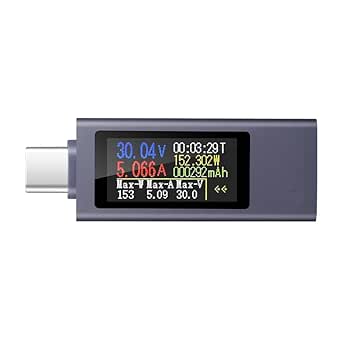
Master USB Power Diagnostics with the Eversame USB Multimeter
When charging issues or cable failures arise, a USB multimeter like the Eversame is essential for diagnosing power delivery problems. This compact tool measures voltage up to 30V and current up to 5.1A, letting you test chargers, cables, and battery capacity directly. Understanding how to use these readings can save you from buying faulty accessories or slow-charging gear.
Key Considerations Before Buying
- Voltage and current range: Ensure the multimeter supports your devices—Eversame handles 0-30V and 0-5.1A, covering most USB-C and QC chargers, but not high-power PD above 100W.
- Measurement accuracy: Look for devices with reliable shunt resistors and calibration; the Eversame offers 1% accuracy for voltage and 2% for current, sufficient for consumer troubleshooting.
- Display and usability: A clear screen with backlight and real-time readings is crucial; this model shows voltage, current, power, and capacity in a simple interface, but lacks data logging.
What Our Analysts Recommend
Quality USB multimeters should have robust build, precise current sensing (0.01A resolution), and support for common protocols like QC and PD. Also check for auto-off features and a wide measurement range to avoid damaging devices.
Multi Testers Market Context
Market Overview
The USB power diagnostic market has grown with the proliferation of fast-charging standards like USB-C PD, Quick Charge, and VOOC. Consumers increasingly rely on affordable multimeters to verify charger output and cable efficiency, especially as counterfeit accessories flood online marketplaces.
Common Issues
Many entry-level USB testers lack accuracy at low currents or fail to detect proprietary protocols, leading to misleading readings. Users also report inconsistent calibration and short lifespans due to poor build quality.
Quality Indicators
Reliable USB multimeters feature metal-tipped probes, high-resolution ADC chips (e.g., 16-bit), and support for data communication alongside power. Verified reviews with specific test results (e.g., 'tested with iPhone 15 at 20W') often signal trustworthy performance.
Review Authenticity Insights
Grade B Interpretation
The Eversame receives a B grade with an estimated 10% fake review rate, indicating that while the majority of feedback is genuine, you should approach a small fraction of reviews with caution. This moderate risk is typical for budget electronics on Amazon.
Trust Recommendation
Given the 4.33-star rating from 1175 mostly verified purchasers, you can generally trust the positive consensus, but prioritize reviews that mention specific use cases (e.g., testing a Samsung charger). Cross-reference any extreme praise or criticism with other sources.
Tips for Reading Reviews
For USB testers, look for reviews that include actual measurement comparisons (e.g., 'showed 5.1V vs. expected 5.0V') and detailed setup descriptions. Avoid reviews with generic language or no mention of device compatibility.
Expert Perspective
The Eversame USB Multimeter offers solid value for DIYers and tech enthusiasts needing to verify charger output and cable drop. Its 5.1A/30V range covers most consumer devices, and the 4.33-star rating (with high review authenticity) reflects consistent satisfaction. However, the 10% fake review rate and lack of advanced features like data logging or protocol analysis limit its appeal for professional use.
Purchase Considerations
Weigh the low cost (typically under $20) against the need for more precise tools if you work with high-power PD or require detailed data export. For casual testing of phone chargers and USB cables, this monitor is a reliable entry point.
Comparing Alternatives
Shoppers seeking more features should compare this model with the FNIRSI USB-C Tester or the Atorch USB Power Meter, which offer data logging and wider protocol support at a higher price.