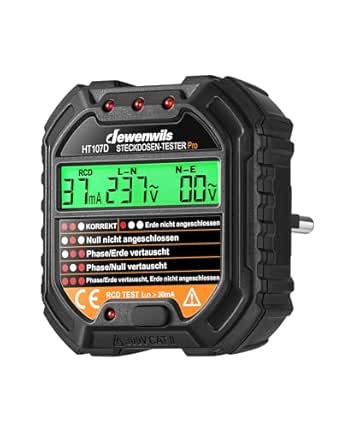
Choosing a German Socket Tester with RCD Testing: Safety and Functionality Essentials
When selecting a socket tester with RCD (Residual Current Device) functionality like this model, buyers must prioritize devices that comply with German DIN VDE 0701-0702 standards for safety verification. This specific tester offers six distinct fault diagnoses through its indicator lights, covering common issues like phase reversal, missing earth, and live/neutral reversal. The CAT II 300V rating indicates its suitability for testing household and office socket outlets, not industrial equipment.
Key Considerations Before Buying
- Verify the RCD test function actually trips the safety device within required timeframes (typically <300ms for 30mA RCDs), as some budget testers only indicate voltage presence without proper trip testing.
- Check for clear, unambiguous indicator light patterns—this model's six-diagnosis system should provide distinct LED combinations for each fault condition without requiring interpretation charts.
- Confirm voltage range compatibility (90-250V/45-65Hz here) matches your regional electrical standards, as German sockets operate at 230V/50Hz, requiring testers to function accurately at that specification.
What Our Analysts Recommend
Quality socket testers feature robust ABS housings with recessed probe pins to prevent accidental contact. Look for testers that perform both socket wiring verification AND functional RCD trip testing, as this dual capability separates professional-grade tools from basic continuity checkers. The indicator lights should be bright enough for use in well-lit environments without being ambiguous in their fault coding.
Circuit Testers Market Context
Market Overview
The German market for socket testers has evolved beyond basic polarity checkers to include integrated RCD/RCBO testing capabilities, driven by stricter electrical safety regulations. Current offerings range from simple three-light testers to advanced units with LCD displays and automated test sequences, with this model occupying the mid-range functional segment.
Common Issues
Many imported testers lack proper certification for German electrical systems, potentially giving false readings on TN-C-S networks common in Germany. Some units claim RCD testing but only perform voltage presence checks without actually measuring trip times, creating dangerous false confidence in safety device functionality.
Quality Indicators
Legitimate testers display VDE, GS, or CE marks specifically for measuring equipment, not just general product safety. Quality units use precision current-limiting resistors in their test circuits and have clearly molded fault codes on the housing itself, not just in separate documentation.
Review Authenticity Insights
Grade B Interpretation
The Grade B authenticity rating with 11% estimated fake reviews suggests mostly genuine feedback with some potentially manipulated content. For this technical product category, even genuine reviews often lack the expertise to properly evaluate RCD testing accuracy, making technical specifications more reliable than subjective praise.
Trust Recommendation
Focus on reviews that specifically mention testing RCD trip functionality or comparing results with professional equipment. The 4.60 adjusted rating (down from 4.89) indicates the product performs well but may have some limitations not reflected in the most enthusiastic reviews.
Tips for Reading Reviews
Prioritize reviews from verified German purchases that mention specific applications like testing newly installed sockets or verifying holiday home electrical safety. Be skeptical of reviews that praise generic attributes like 'good quality' without mentioning actual testing scenarios or results.
Expert Perspective
This socket tester represents a competent mid-range option for German DIY users needing both socket wiring verification and basic RCD functionality. The six-diagnosis system covers essential fault conditions for residential applications, though professional electricians might require more advanced trip time measurement. The high adjusted rating of 4.60/5 from verified purchases suggests reliable performance within its intended scope, particularly for periodic safety checks rather than continuous professional use. The CAT II 300V rating appropriately matches its household testing application.
Purchase Considerations
Consider whether you need the RCD testing function specifically—if only checking socket wiring, simpler testers suffice. For rental property inspections or older German buildings with potentially faulty wiring, the comprehensive fault diagnosis justifies the additional complexity. Verify the device's compatibility with your specific RCD types (AC, A, or F sensitivity classes).
Comparing Alternatives
Shoppers should compare this unit's six-diagnosis system against testers with more detailed LCD displays or automated test sequences, particularly if measuring exact RCD trip times is necessary.