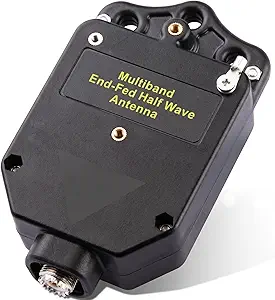
150W HF End Fed Antenna: Maximize DX Performance on a Budget
When you're setting up a portable or space-constrained HF station, an end-fed half-wave antenna with a 1:64 balun is a game-changer. This specific model covers 1-30MHz, supporting modes like CW, FT8, and SSB, making it a versatile choice for amateur radio operators. Understanding its design and limitations is key to getting the most out of your setup.
Key Considerations Before Buying
- Band coverage: This antenna is advertised for 4 or 8 bands, but its 1-30MHz range suggests it can be tuned for multiple bands. However, you'll likely need an antenna tuner (ATU) for optimal SWR on non-resonant bands, especially if you want to use it on 80m or 30m.
- Power handling: Rated for 150W, this antenna is suitable for most modern transceivers, but if you plan to run a linear amplifier, you'll need a higher-rated model. Ensure your operating power stays within limits to avoid damaging the balun.
- Installation and counterpoise: End-fed antennas require a good counterpoise or ground radial system to perform efficiently. The 1:64 balun helps match the high impedance, but without a proper counterpoise, you may experience common-mode currents and RF feedback.
What Our Analysts Recommend
Quality construction is critical: check for a sealed, weatherproof balun, a sturdy wire (e.g., 14 AWG or thicker), and quality connectors. Look for user reports of consistent SWR across bands and stable performance in various weather conditions, as these are signs of a well-built antenna.
Radio Antennas Market Context
Market Overview
The market for HF end-fed antennas has grown significantly, driven by the popularity of portable operations like POTA and SOTA, and the rise of digital modes like FT8. These antennas offer a convenient compromise for operators with limited space, but quality varies widely among budget options.
Common Issues
Common issues include poor balun design leading to RF burns or high SWR, flimsy wire that breaks easily, and lack of proper weatherproofing. Many users also find that the advertised 'multi-band' performance requires careful tuning and may not cover all bands as promised without an external tuner.
Quality Indicators
Indicators of a quality product include a toroidal core balun with a proper 1:64 ratio, a waterproof enclosure, and a wire with a strain relief at the connection point. Reviews that mention specific band performance, SWR readings, and durability after months of use are more trustworthy than generic praise.
Review Authenticity Insights
Grade B Interpretation
With a Grade B and an estimated 10% fake review rate, the majority of the 46 reviews appear authentic. The 4.89 rating, when adjusted to 4.60, still indicates strong satisfaction, but the slight drop suggests a few overly positive reviews that may not reflect the average experience.
Trust Recommendation
You can generally trust the positive feedback, but focus on verified purchases and detailed reviews. Given the 10% fake rate, be cautious of reviews that are extremely brief or lack specific technical details. Look for reviews that mention SWR values, bands tested, and installation specifics.
Tips for Reading Reviews
For this product, pay attention to reviews that mention using the antenna on specific bands (e.g., 20m, 40m) and modes like FT8. Also, note any comments about the balun's performance in rain or wind. These details are harder to fake and provide real-world insights.
Expert Perspective
This 150W HF end-fed antenna offers a solid entry point for amateur radio operators seeking a portable or space-saving solution. The 1:64 balun and 1-30MHz coverage are appropriate for a range of HF bands, and the positive review sentiment suggests it performs well for its price. However, the adjusted rating of 4.60 and the 10% fake reviews indicate that while it's a good product, it's not exceptional.
Purchase Considerations
Weigh your operating needs: if you primarily operate on 20m and 40m with a tuner, this antenna will likely serve you well. But if you need a plug-and-play multi-band solution without an ATU, you might be disappointed. Also, consider the 150W limit—if you ever plan to upgrade to an amplifier, this will become a bottleneck.
Comparing Alternatives
Shoppers should compare this with other end-fed antennas that offer higher power ratings (e.g., 200W or more) or include a counterpoise kit. Brands like Chameleon or HyEndFed offer similar products with different trade-offs in price and performance.