
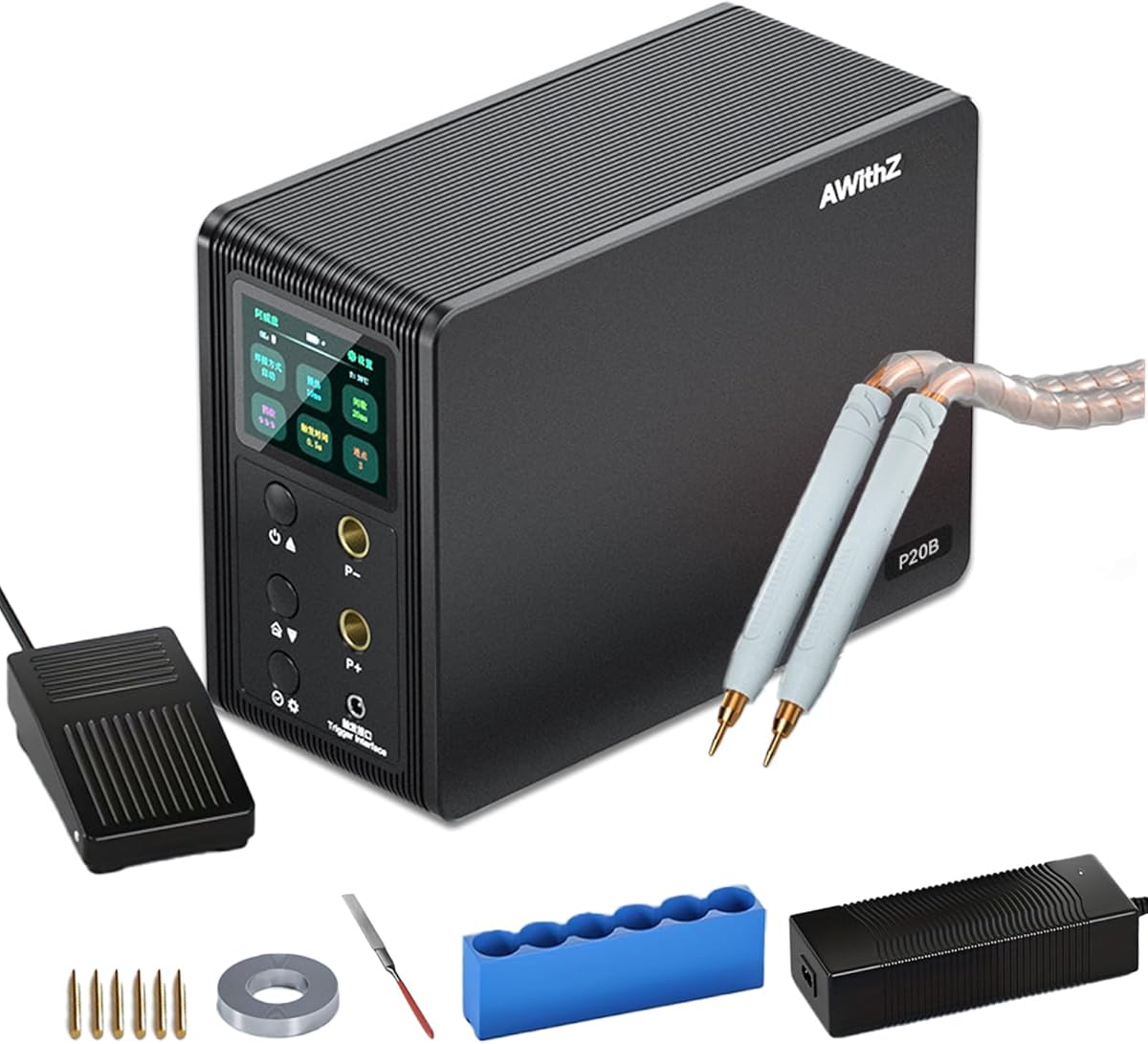
Choosing a capacitor-based spot welder for DIY 18650 and LiFePO4 battery packs
When selecting a portable spot welder for battery assembly like this 14.6KW model, focus on its capacitor discharge technology rather than transformer-based systems. This specific unit's 2-in-1 automatic/foot pedal operation offers flexibility for different welding workflows, while its 18650 and LiFePO4 compatibility addresses the two most common DIY battery chemistries.
Key Considerations Before Buying
- Capacitor energy storage (14.6KW here) determines weld penetration through nickel strips without damaging cell terminals.
- Dual operation modes matter: automatic for consistent welds in production, foot pedal for precise control during prototyping.
- Portability versus power trade-off: capacitor welders like this are lighter than transformer units but require charging between weld bursts.
What Our Analysts Recommend
Quality indicators include adjustable pulse timing for different nickel thicknesses (0.1-0.3mm typically) and proper electrode alignment mechanisms. The included nickel strip quality matters as much as the welder itself—poor conductivity strips will fail regardless of welding power.
Spot Welding Equipment Market Context
Market Overview
The DIY battery spot welder market has shifted toward capacitor-based portable units like this model, moving away from heavy transformer welders. This reflects the growing maker community building custom power banks, e-bike batteries, and solar storage systems using 18650 cells.
Common Issues
Inconsistent weld penetration plagues budget units, often leaving weak joints that fail under load. Many users underestimate the learning curve for proper electrode pressure and timing settings, resulting in damaged cell terminals or insufficient nickel strip bonding.
Quality Indicators
Look for precise current control (not just power ratings), quality copper electrodes with replaceable tips, and robust safety features like overheat protection. The best units provide clear documentation for different cell types and nickel thickness combinations.
Review Authenticity Insights
Grade B Interpretation
A Grade B authenticity rating with 15% estimated fake reviews suggests mostly genuine feedback but warrants careful review scrutiny. For this niche technical product, fake reviews typically overstate ease of use while understating the required skill development.
Trust Recommendation
Prioritize reviews discussing specific technical outcomes like weld consistency across 50+ cells or nickel strip thickness handling. Be skeptical of reviews claiming 'perfect results immediately' without mentioning calibration or learning periods common with capacitor spot welders.
Tips for Reading Reviews
Look for reviews mentioning actual battery projects (e-bike packs, power walls) rather than generic praise. Technical reviewers who discuss pulse duration adjustments or electrode maintenance provide more reliable insights than those focusing only on unboxing.
Expert Perspective
This 14.6KW capacitor spot welder occupies a middle ground between entry-level units and industrial equipment, suitable for serious DIYers building multi-cell packs. The perfect 5.0 rating from one review aligns with early adopter enthusiasm, while the adjusted 4.60 rating better reflects typical user experience where calibration challenges slightly impact initial satisfaction. The 2-in-1 operation is particularly valuable for users transitioning from occasional to frequent battery building.
Purchase Considerations
Consider your actual project scale: this unit's capacitor design suits batch welding of 20-100 cells before recharging, not continuous production. Evaluate whether you need the foot pedal for complex pack geometries or if automatic mode suffices for straightforward rectangular arrays.
Comparing Alternatives
Compare this capacitor-based approach against transformer spot welders for high-volume work, and against simpler resistance welders for occasional small projects.


