See Clearly: Expert Guide to Self-Adjusting Blue Light Glasses
If you're eyeing the Clarity Blue Self Adjusting Reading Glasses, you're likely seeking relief from digital eye strain without juggling multiple pairs. This guide focuses on the unique 'self-adjusting' mechanism—a feature that sets these glasses apart from fixed-magnification readers—and what that means for your daily screen use.
Key Considerations Before Buying
- Self-adjusting lenses use fluid-filled chambers to adapt magnification based on where you're looking, which can help if you switch between reading a book and a computer screen. However, this technology works best for those with presbyopia (age-related near vision loss) and may not suit users with astigmatism or other complex prescriptions.
- Blue light blocking effectiveness depends on lens tint and coating; darker yellow or amber tints block more blue light but can distort color perception for design work. Check if the Clarity Blue glasses specify the percentage of blue light blocked (e.g., 90% at 400-450nm) to match your needs.
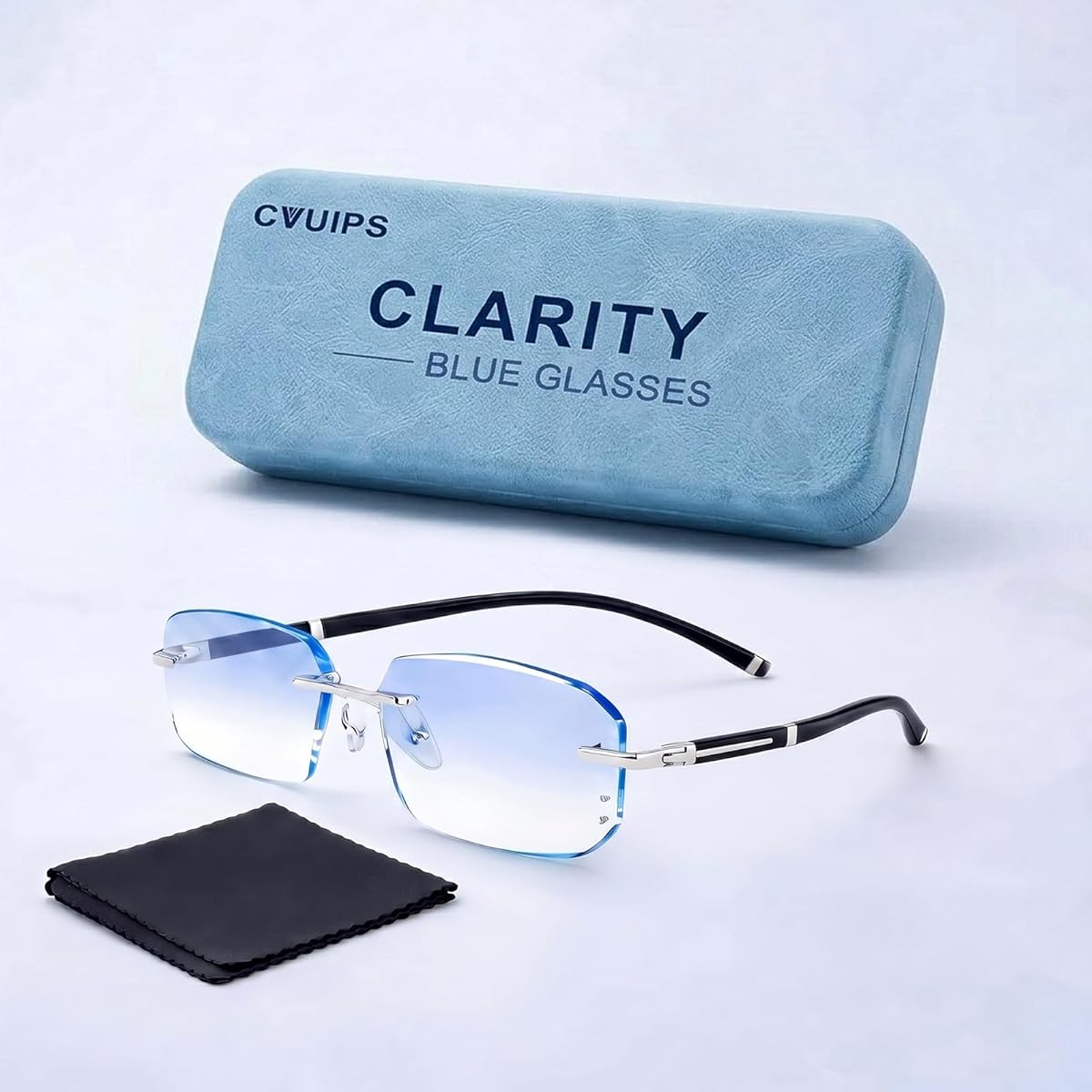
- Comfort and fit are critical for all-day wear—look for lightweight frames (under 25g) and adjustable nose pads. The included case and cloth suggest the manufacturer prioritizes durability, but you should verify frame material (e.g., TR90 or acetate) for flexibility and skin sensitivity.
What Our Analysts Recommend
Quality self-adjusting glasses should have a smooth, reliable lens transition without visible bubbles or delays. Also, ensure the blue light filter has independent lab testing verification, not just marketing claims, and that the frame fits your face shape to avoid pressure points.
Blue Light Blocking Glasses Market Context
Market Overview
The blue light blocking glasses market has exploded as remote work and screen time surge, with self-adjusting reading glasses carving a niche for presbyopic users who want one pair for multiple distances. However, many products still lack third-party certification, making consumer reviews and authenticity checks vital.
Common Issues
Common problems include inconsistent blue light filtration (some glasses block only 20% of harmful wavelengths), flimsy frames that break within months, and self-adjusting lenses that fail to focus properly or cause eye fatigue. Counterfeit or overhyped products are also rampant, often promising 'doctor recommended' benefits without clinical backing.
Quality Indicators
Look for glasses with ANSI Z80.3 impact resistance certification, a transparent blue light blocking spectrum chart, and a warranty of at least one year. Verified reviews that mention specific use cases (e.g., 'helped with my 8-hour workday headaches') are stronger signals than vague praise.
Review Authenticity Insights
Grade B Interpretation
The Clarity Blue glasses earned a Review Authenticity Grade of B, meaning the vast majority of its 34 reviews are genuine. With an estimated 12% fake review rate, roughly 4 reviews may be unreliable—a relatively low risk but worth noting for such a niche product.
Trust Recommendation
You can trust the core sentiment—4.50/5 stars—but adjust your expectations slightly to the adjusted rating of 4.20/5. Focus on reviews that describe specific experiences like 'switching between reading and computer work' or 'comfort after 6 hours' to filter out potential fakes.
Tips for Reading Reviews
Prioritize reviews with 'Verified Purchase' tags and those that mention both pros and cons. For self-adjusting glasses, look for comments on lens transition speed and clarity at different distances—these details are harder for fake reviewers to fabricate.
Expert Perspective
The Clarity Blue Self Adjusting Reading Glasses offer a compelling solution for presbyopic users who want blue light protection without carrying multiple pairs. The strong authenticity grade and high rating suggest genuine user satisfaction, particularly around comfort and reduced eye strain. However, the limited review count (34 total) and 12% fake rate mean you should approach with cautious optimism—this is not a market leader yet, but a promising entry that likely delivers on its core promise.
Purchase Considerations
Weigh the convenience of self-adjusting lenses against potential drawbacks like slower adaptation for some users or higher cost compared to fixed readers. If you have astigmatism or need prescription correction beyond reading magnification, these glasses won't replace your regular eyewear.
Comparing Alternatives
Shoppers should compare these with other self-adjusting options like the Adlens or Zenni's variable focus glasses, as well as fixed-magnification blue light blockers from brands like Felix Gray or Warby Parker to find the best fit for their specific vision needs.